



When global projects move to China, monitoring tools can change, but the on-call process must stay consistent. We needed a China-based PagerDuty equivalent: reliable phone calls, actions in Teams, data stored in China, and rules consistent with the global process. Flashduty demonstrated the complete workflow during the trial, which was a major reason we chose it.
— Edward Li, Head of Operations, WPP China
WPP, one of the world's largest marketing communications groups, has invested in AI and digital initiatives, including its WPP Open platform. As global projects move to China, WPP China also needs local alternatives for the operations tools behind them.
Overseas, Datadog handles monitoring and PagerDuty handles on-call response. In China, the team had already chosen a local observability platform. It selected Flashduty to build the on-call layer while retaining its established response process.
Monitoring needs an on-call response process
Monitoring identifies an abnormal condition. An on-call platform determines who responds, how quickly, and who gets notified if no one responds. WPP's overseas process was built around that division of responsibilities.
The China team needed a platform to manage the path from alert to incident closure, without changing its established on-call process.
Six questions guided the evaluation
The team evaluated whether it could connect its existing monitoring platform and separate alerts by microservice; manage incidents in Microsoft Teams; reach responders by phone and SMS in China and, in future, other countries; and reproduce schedules, temporary shift changes, reminders, escalation, noise reduction, and postmortems.
It also needed alert data stored in China and a licensing model that charged responders while allowing notification-only recipients to receive alerts without a license.
A trial tested the complete workflow
WPP China used a Flashduty trial account to simulate CPU, memory, and network alerts. The team tested integration, routing, scheduling, escalation, and noise reduction and used the results for its internal selection and project proposal.
The tests checked whether an alert reached the appropriate microservice workspace, whether the on-call engineer received a phone call and a Teams card, and whether an unacknowledged incident escalated on time.
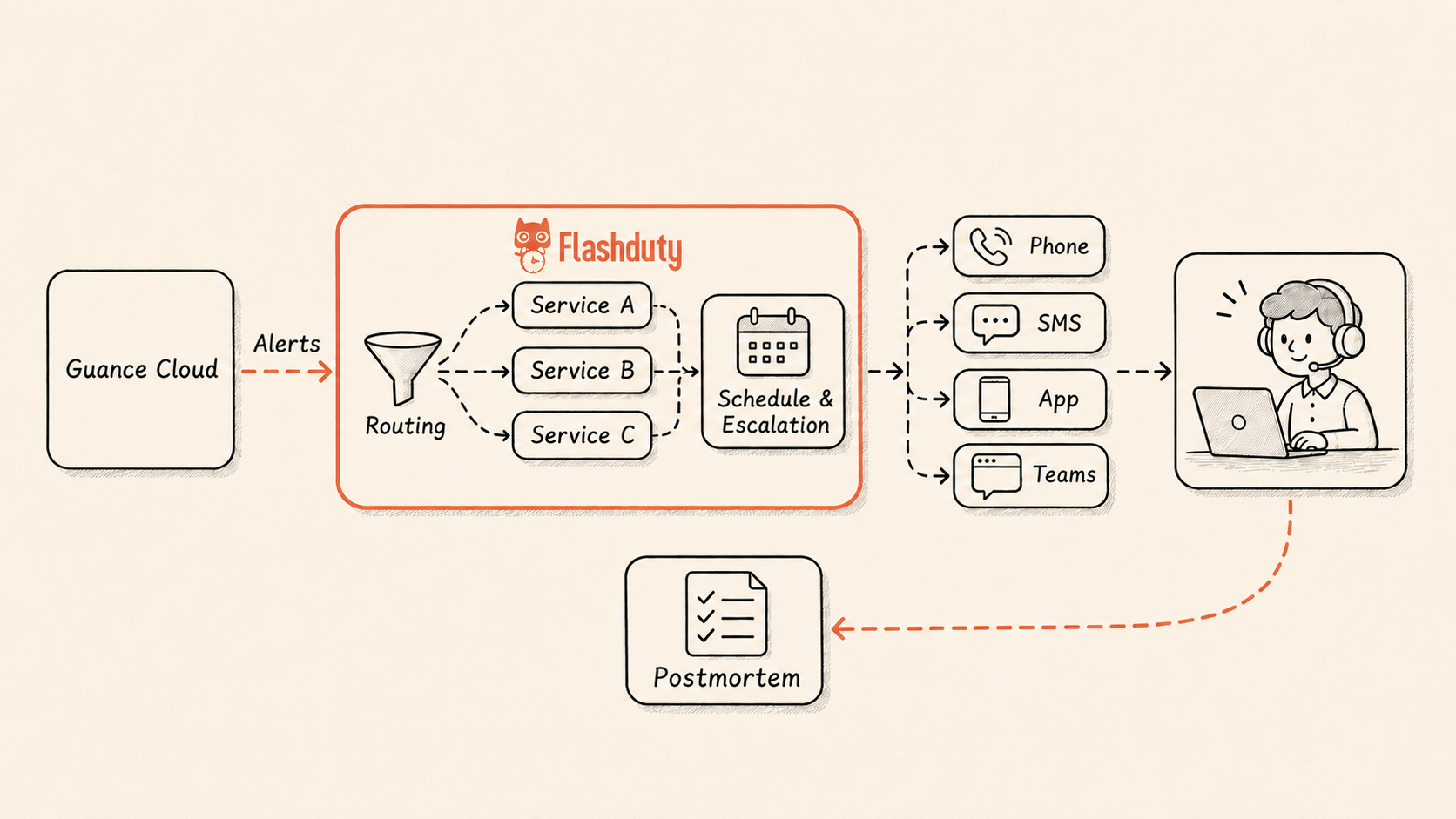
How Flashduty met the requirements
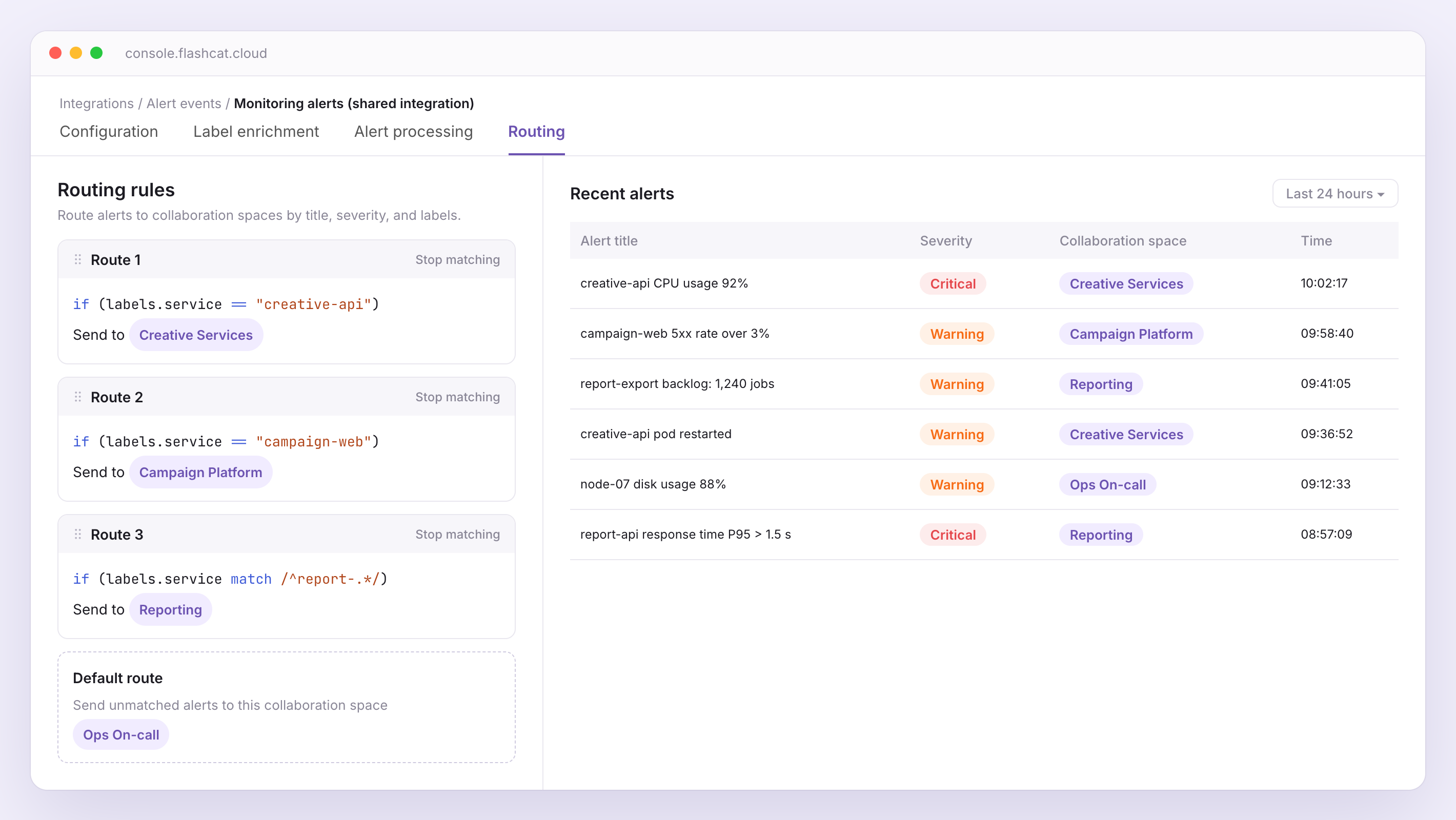
Route monitoring alerts by microservice
Flashduty supports alerts from hundreds of monitoring systems, including WPP China's existing platform. Routing rules use service and business labels to send alerts to separate collaboration spaces. Each microservice or business line can configure its own assignment policy and responders.
When source fields need enrichment, label enhancement can extract fields with regular expressions, combine labels, or map data. For example, a configuration management database (CMDB) mapping can add a service's responsible team for routing.
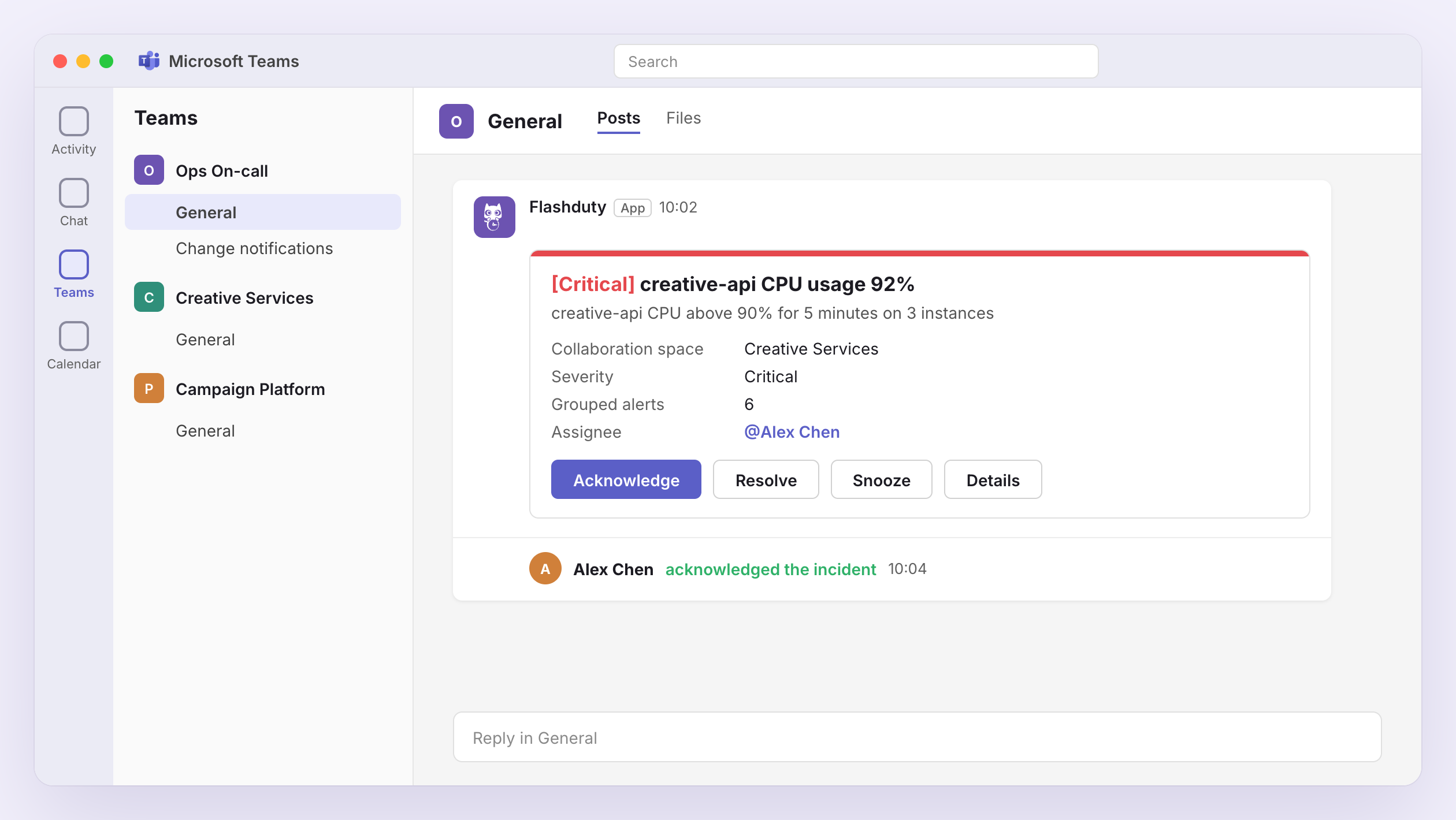
Respond in Microsoft Teams
Users can find Flashduty in the Teams Apps store and add it to a team channel or group chat. Incident assignment notifications arrive as cards, where responders can acknowledge or resolve incidents. Card status updates with the incident and stays in sync with the Flashduty console and mobile app.
Reach responders by phone, SMS, and app
Flashduty uses domestic carrier routes for phone calls and SMS in China and overseas carrier routes outside China. Fixed caller IDs can be added to a phone's allowlist. The app supports system-level push from Huawei, Xiaomi, OPPO, and vivo; on iOS, Critical Alerts can sound even in Do Not Disturb mode.
Preserve on-call schedules and escalation
WPP's process was built on PagerDuty. Its core concepts map broadly to Flashduty:
| PagerDuty | Flashduty |
|---|---|
| Service | Collaboration space |
| Escalation Policy | Assignment policy |
| Schedule | On-call schedule |
| Incident | Incident |
| Acknowledge / Resolve | Acknowledge / Close |
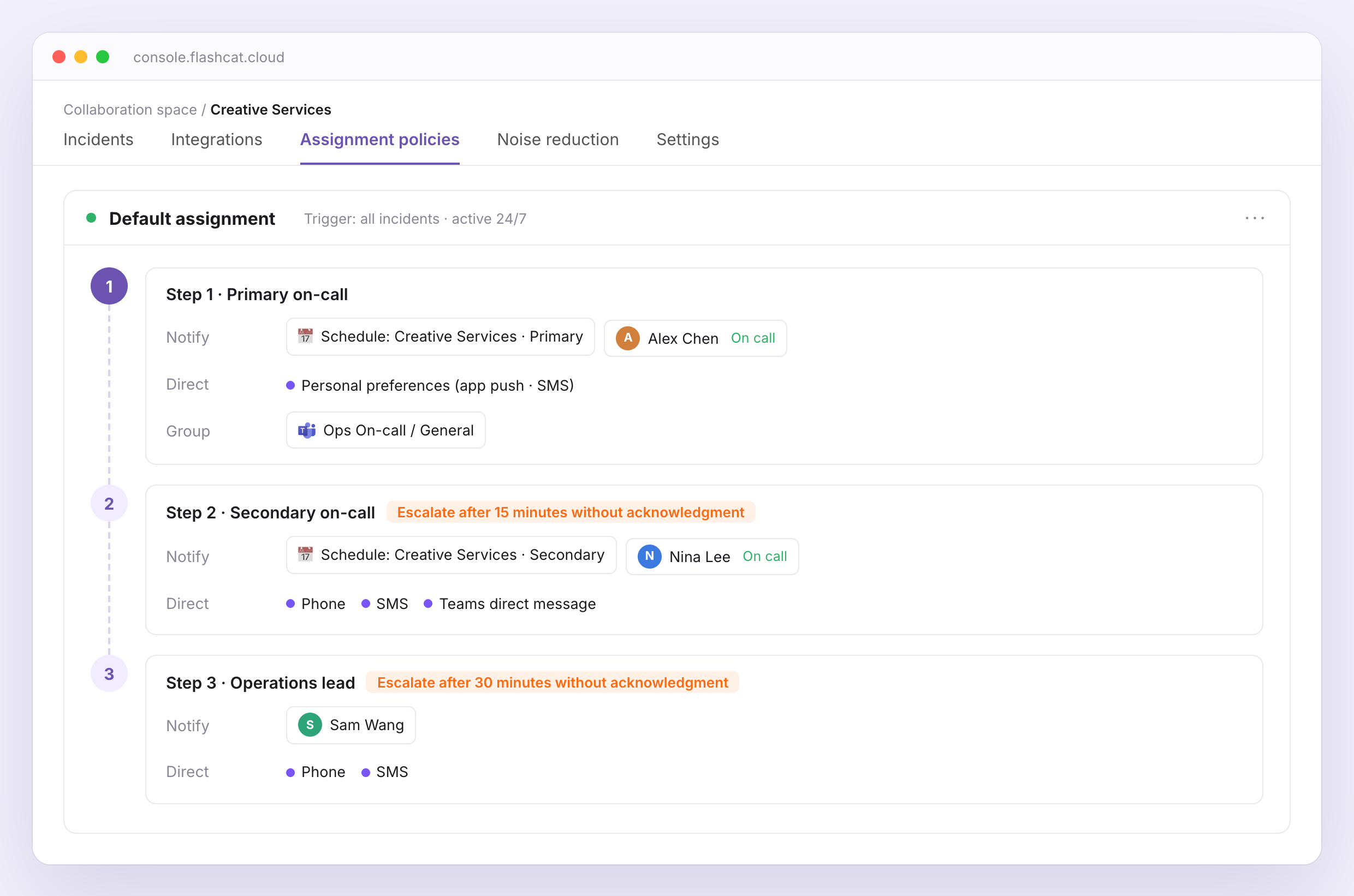
The team configured schedules and assignment policies around its existing standards. Schedules support rotations, temporary shift changes, and reminders. An incident first notifies the on-call person and escalates if no one acknowledges it within the configured time. Consistent rules also make handoffs with global colleagues easier.
Reduce noise in three stages
Flashduty processes raw events from monitoring systems into alerts, then groups alerts into incidents for responders. Duplicate alerts from the same problem can be consolidated into one notification. Teams can also configure suppression, silencing, and alert storm warnings.
Store data in China and license responders
Flashduty SaaS stores customer data in mainland China. Role-based permissions and audit logs allow teams to trace configuration changes and incident actions. Members who log in to handle incidents require licenses; members who only receive notifications do not.
Validate the operations toolchain locally
A move to China requires teams to verify each part of the operations toolchain against local network, mobile, messaging, and data requirements. The WPP China trial checked whether alerts could be received and routed, responders reached, and unattended incidents escalated.
Flashduty also provides AI assistance for investigation. As WPP moves more global projects to China, Flashduty will continue supporting the China team.
Explore Flashduty on-call management or book a demo.