

Now
Featured
Featured
Why DeepSeek moved its status page from Atlassian to Flashduty
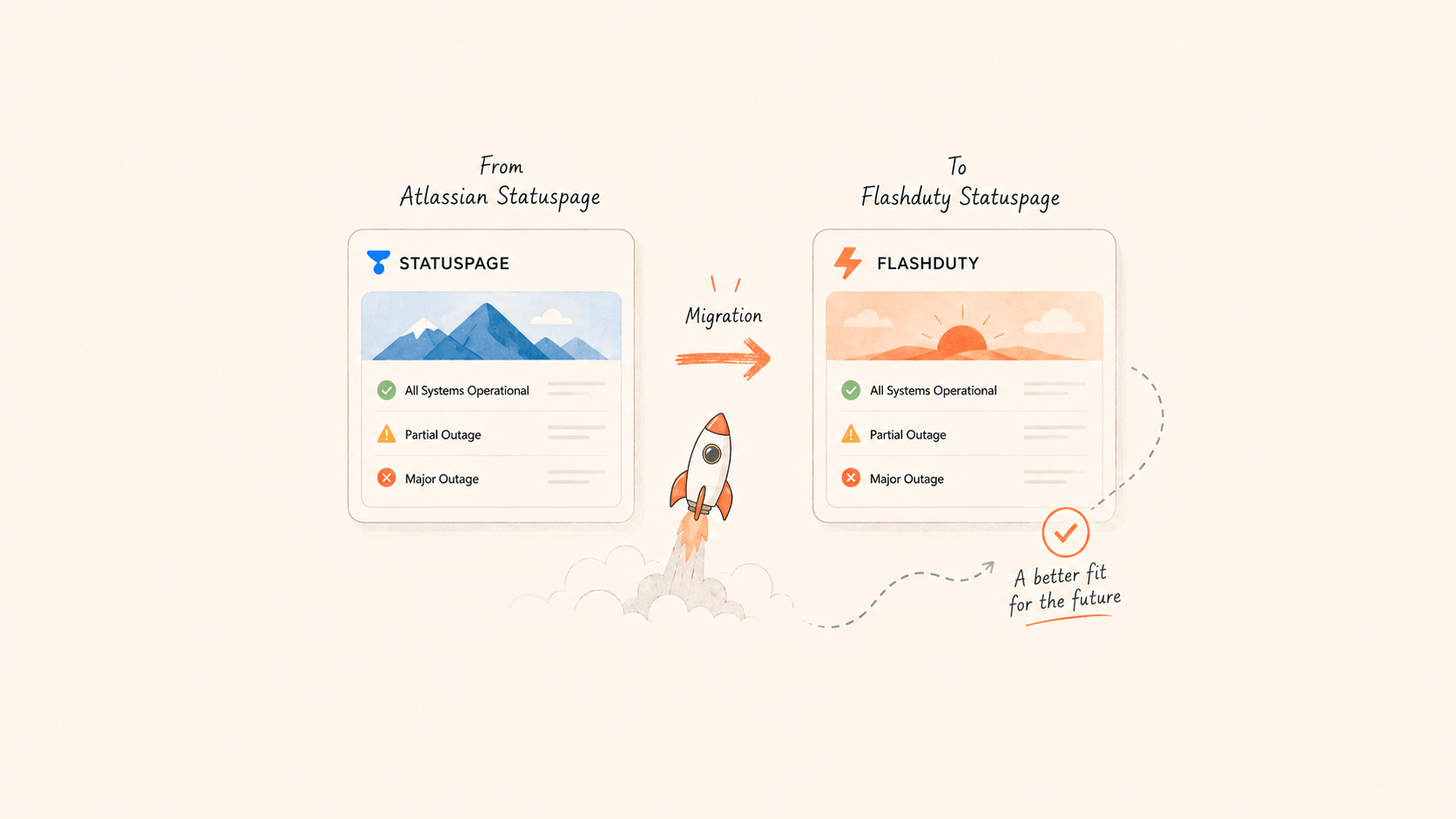
DeepSeek moved its public status page from Atlassian Statuspage to Flashduty Statuspage. The decision came down to Chinese support, cost, page experience, the credibility of self-hosting, and subscriber migration. The migration took two CLI commands.
Flashduty Support

One lock per session: A plain-Redis runtime that keeps AI agent sessions ordered and crash-safe
Inside Flashduty AI SRE, part 1: Redis locks, lists, and Pub/Sub keep session messages in order, recover unfinished work after crashes, and keep idle sessions from tying up connections.
Flashduty Engineering
Opsgenie alternatives in 2026: Choose a path before the April 2027 shutdown
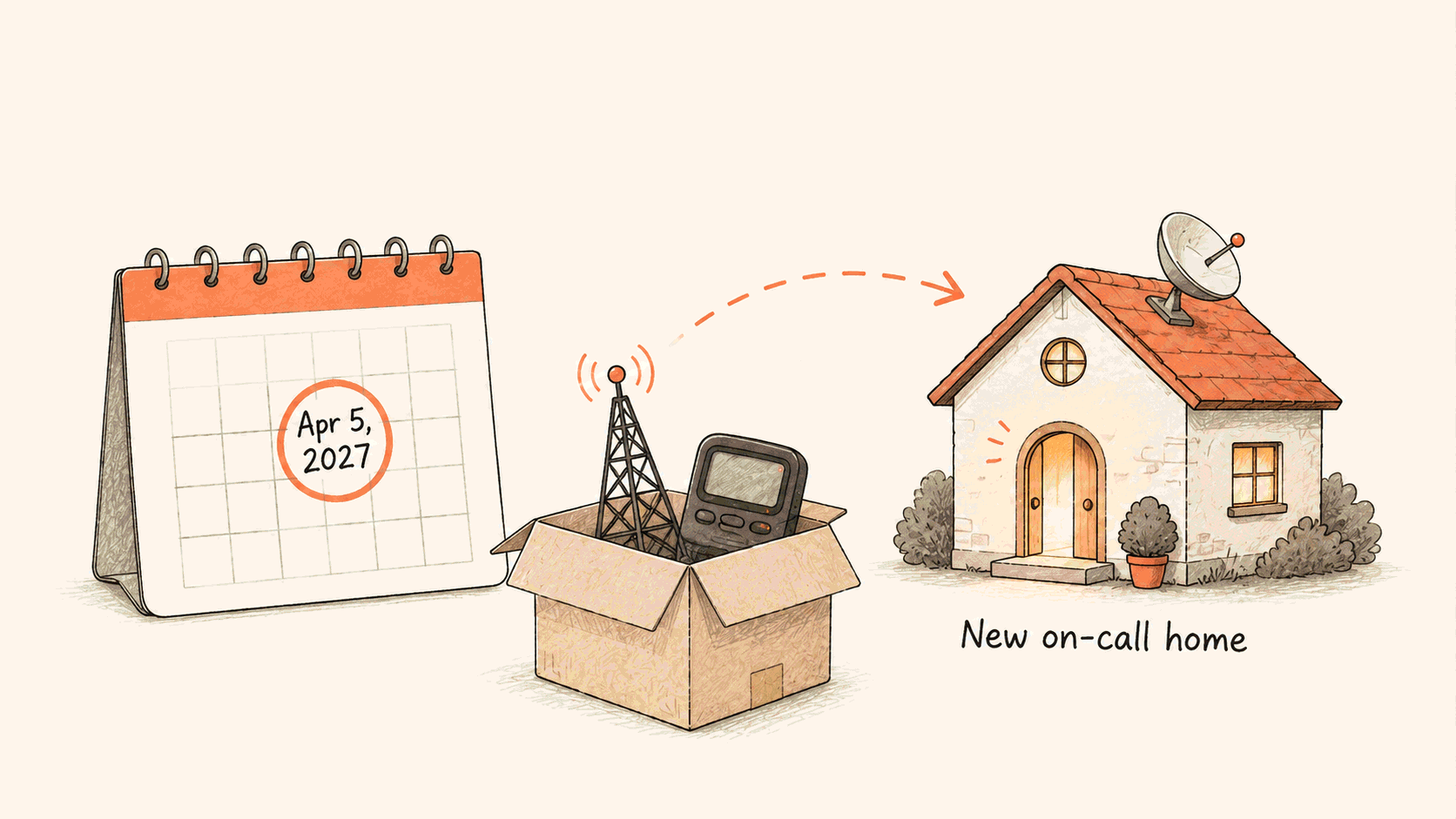
Opsgenie ends support on April 5, 2027, and Atlassian deletes data that hasn't moved. Compare Jira Service Management with independent on-call platforms, with sourced pricing as of October 2026 and a four-week migration plan.
Flashcat Technical Team
PagerDuty alternatives in 2026: Compare who you pay for, not the price per seat
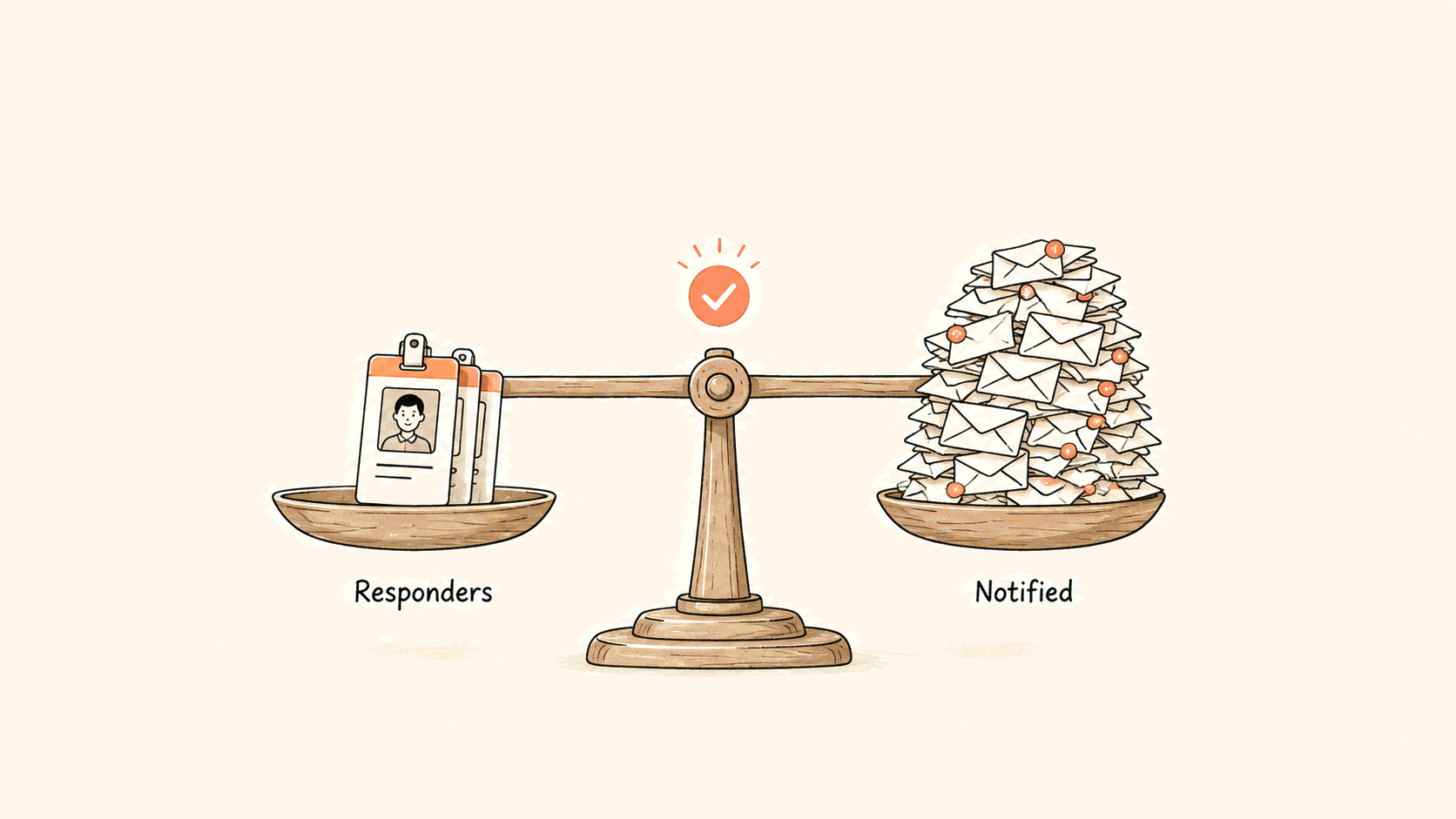
A sourced comparison of six PagerDuty alternatives as of October 2026: Flashduty, incident.io, Grafana Cloud IRM, Better Stack, FireHydrant, and Jira Service Management. Covers pricing for notification-only users, AI, status pages, and migration.
Flashcat Technical Team
Keep monitoring data in every environment and manage alerting in one place
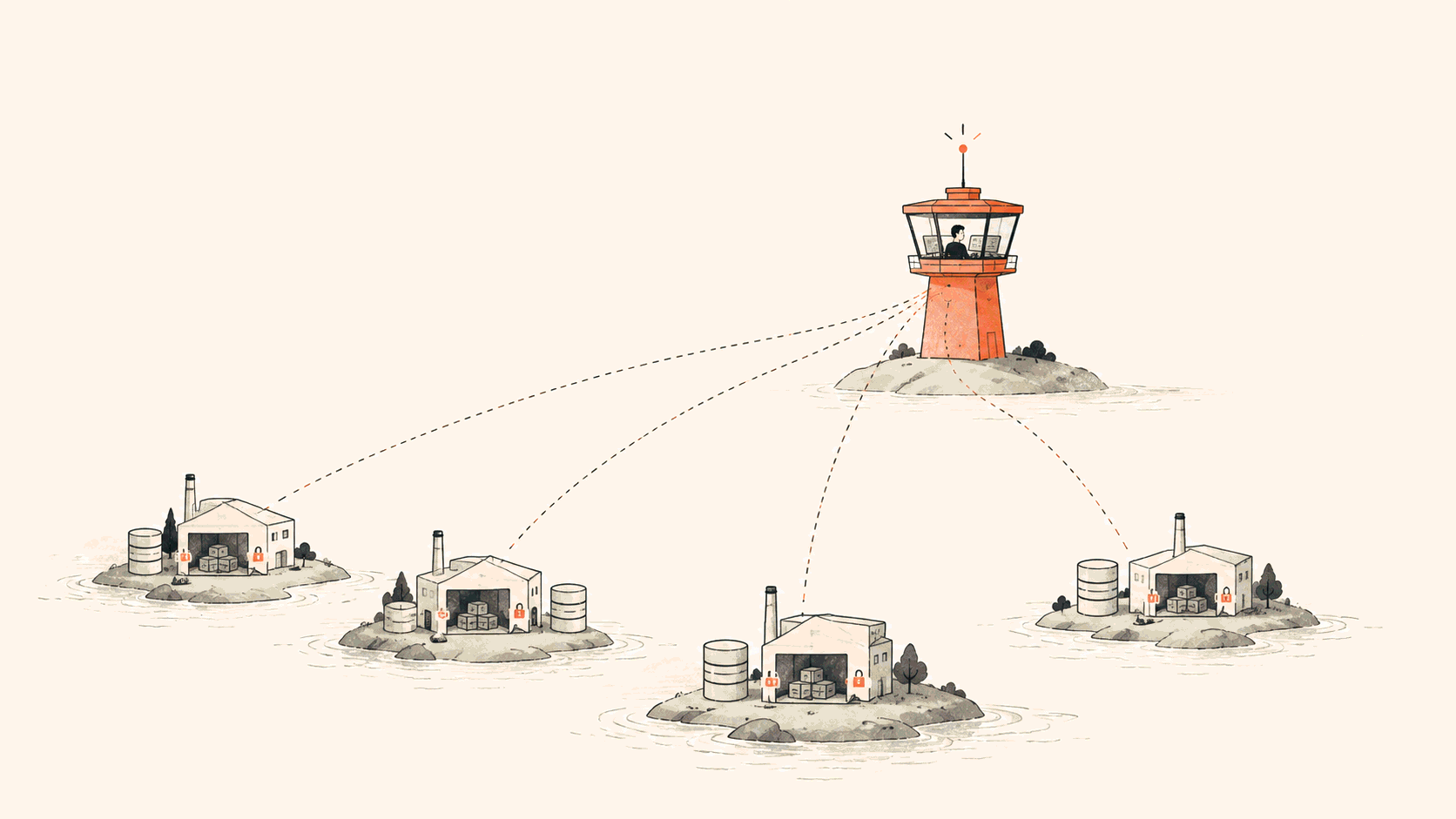
Distributed data sources are a reasonable reality, but alerting rules, runtime status, and investigation should not fragment with them. Flashduty Monitors keeps data inside private networks while centralizing alerting and analysis in one control plane.
Flashcat Technical Team

AI SRE and your agents can now delegate tasks to each other
Register an external agent in the console and AI SRE can delegate whole tasks to it, with progress streaming back into the conversation. It works the other way too: AI SRE exposes a standard A2A endpoint and accepts tasks from other agents.
Flashduty Engineering
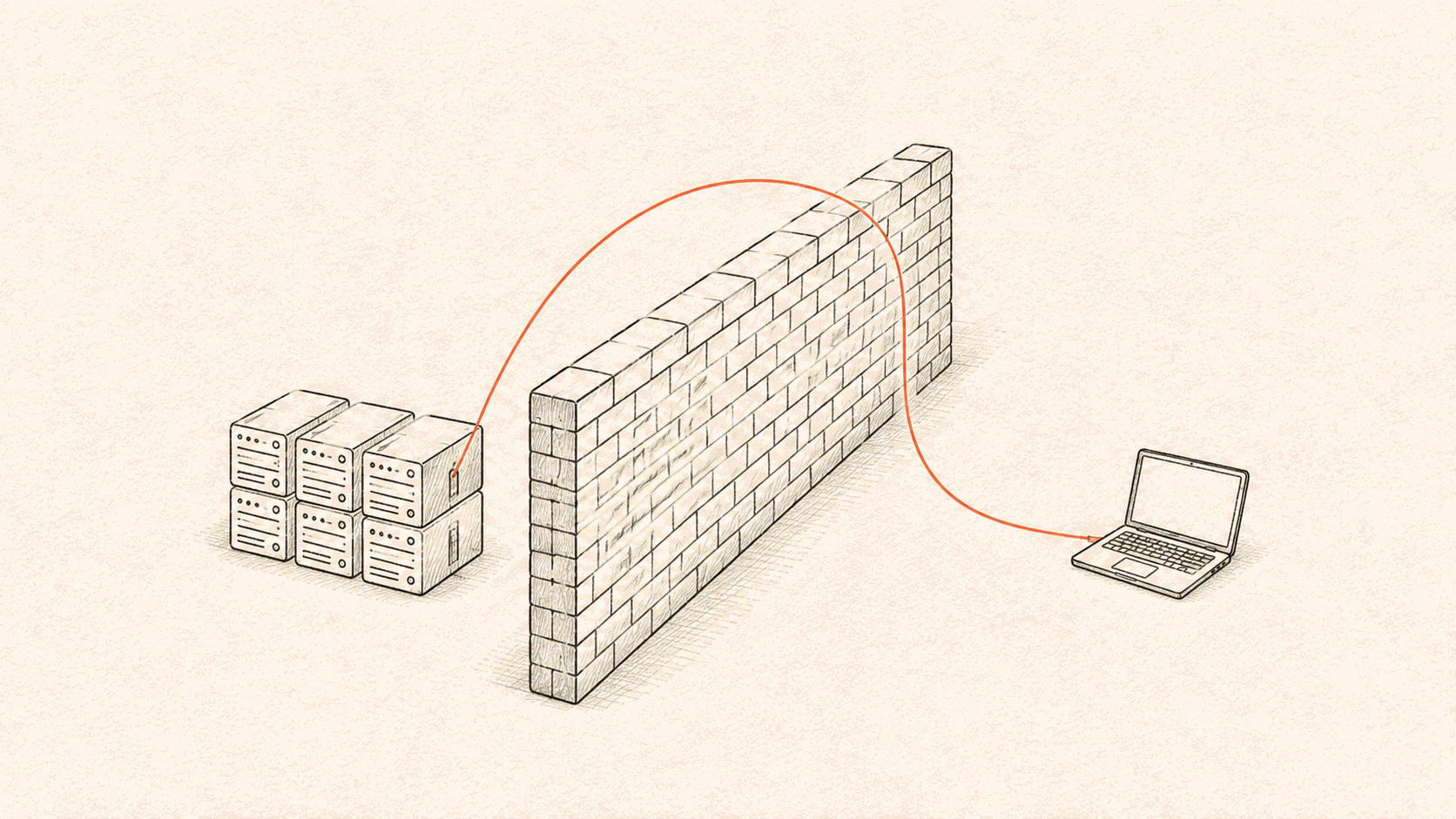
Safe cluster access for AI SRE: No kubeconfig, no open ports
To bring a cluster into AI SRE we wanted four things at once: full kubectl, no inbound ports, no credentials leaving the cluster, and tight permissions without a hand-written tool list. What we shipped runs real kubectl, has your cluster dial out to us, and leaves every permission decision to Kubernetes.
Flashduty Engineering
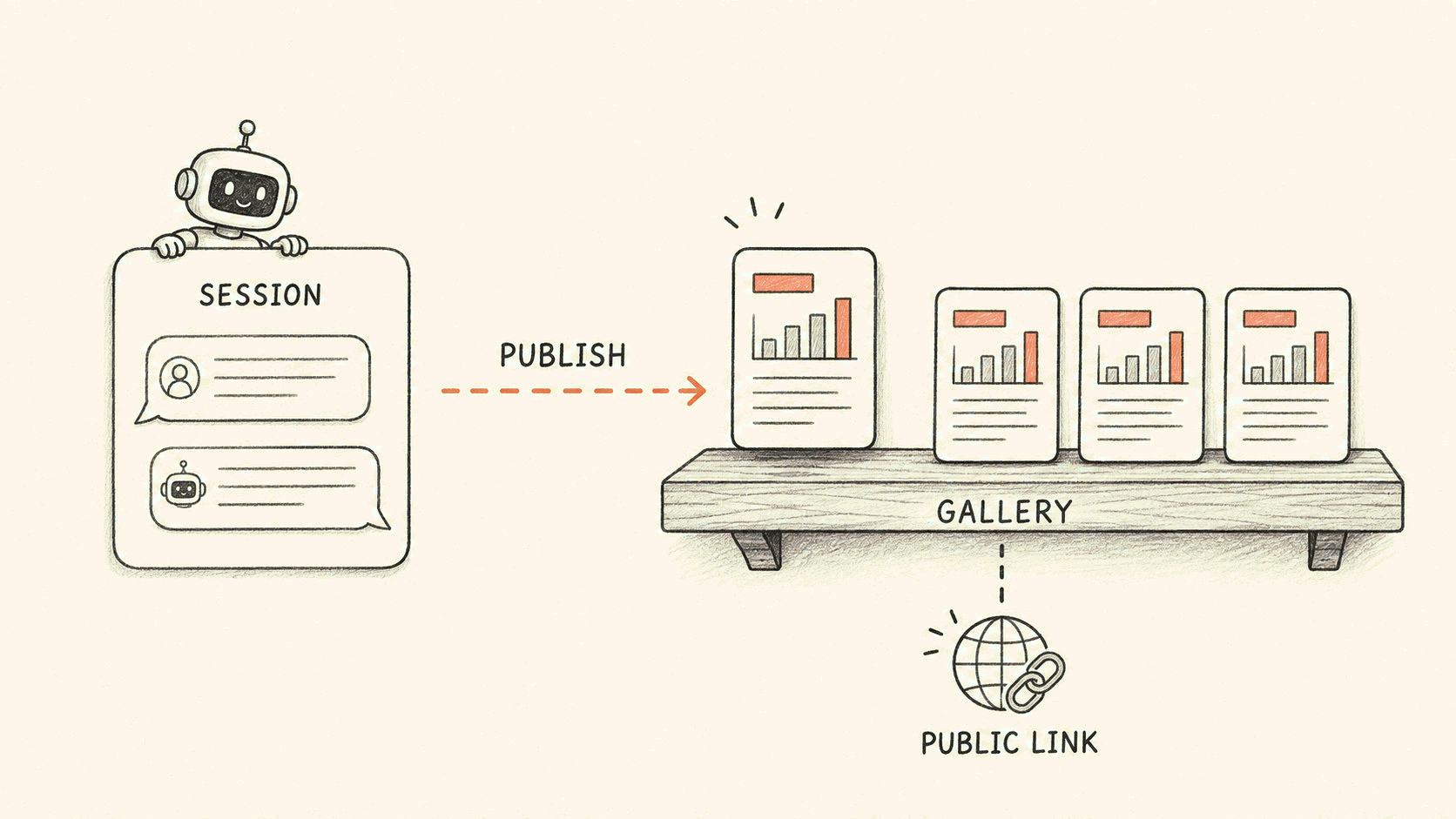
AI SRE Artifacts: A permanent, shareable link for every report
Reports, design documents, and pages from your AI SRE sessions can now be published as artifacts. An artifact does two things: it stays, with its own address in the team gallery, and it goes out, over a public link that needs no sign-in.
Flashduty Product
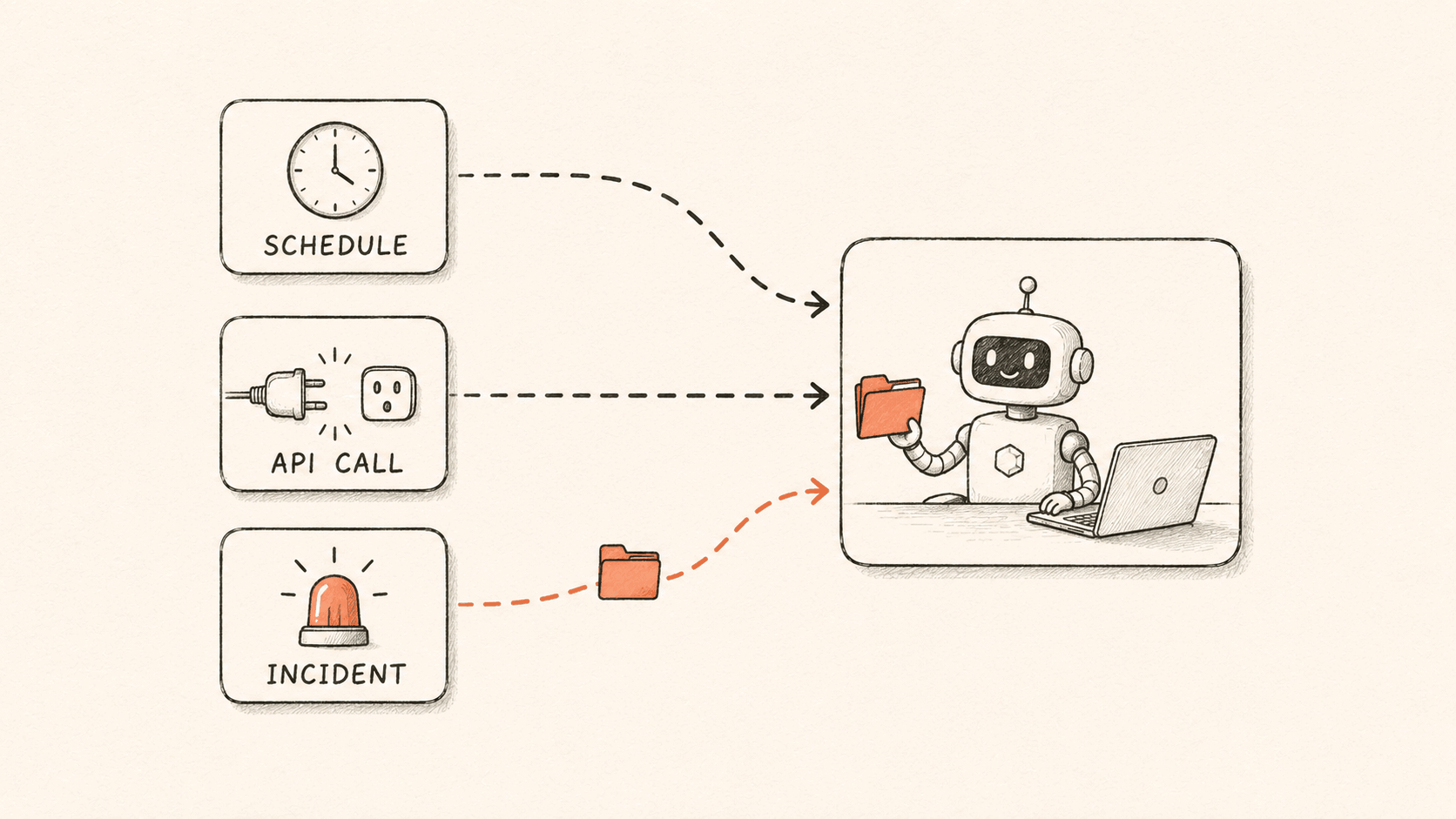
Working at 3 a.m.: Five ways to use AI SRE Automations
Five ways to use Flashduty AI SRE Automations: weekly insights, alert governance, incident analysis, deploy checks, and change risk checks. Each comes with the exact task prompt and shows how results reach people.
Flashduty Product
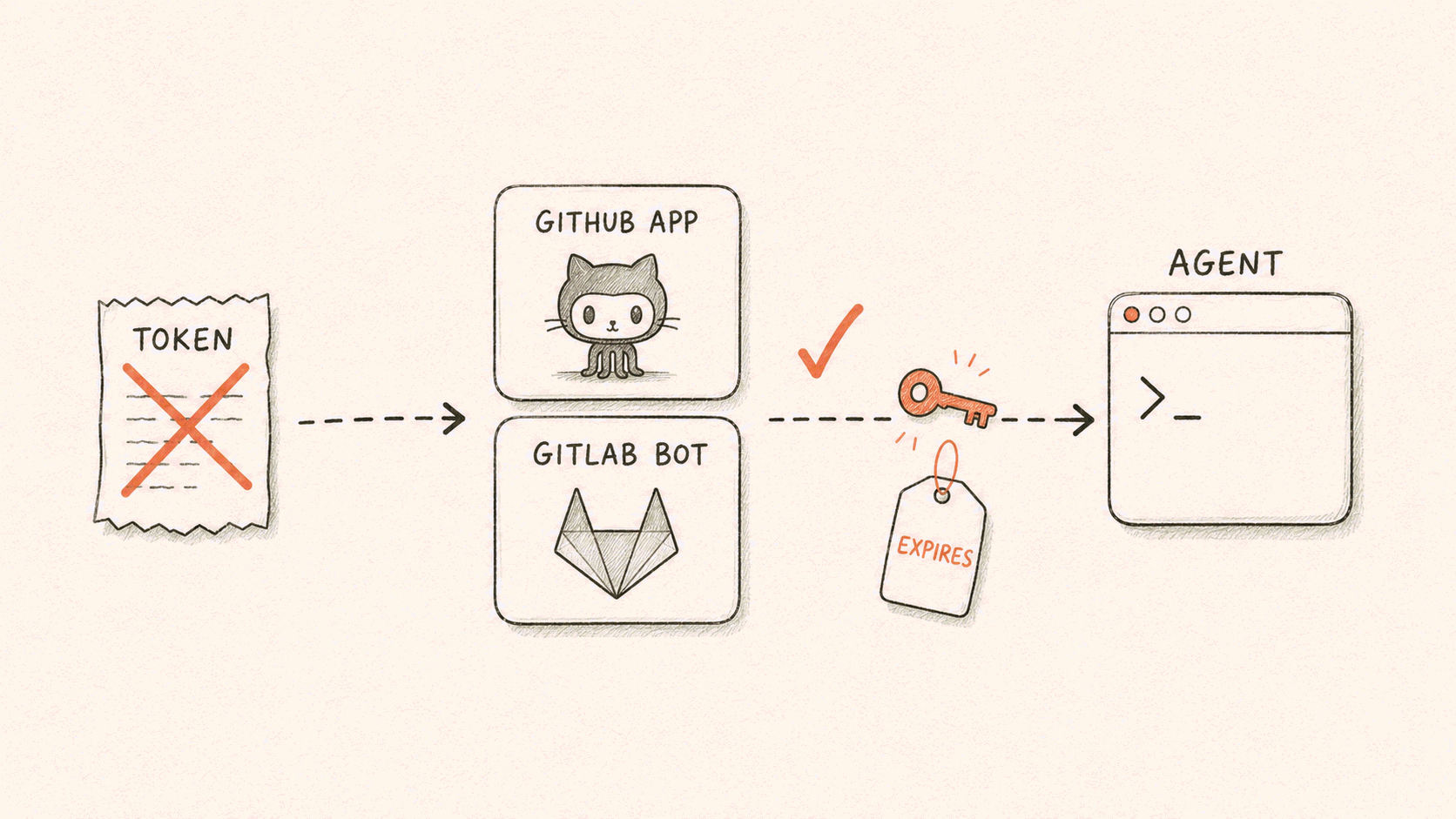
GitHub and GitLab Apps for AI SRE: Read commits and CI logs, and open PRs
AI SRE can now connect to your GitHub organization or GitLab instance: it reads recent commits during an investigation, reads the failing CI logs on its own, and opens PRs for small fixes. You never paste a token.
Flashduty Product
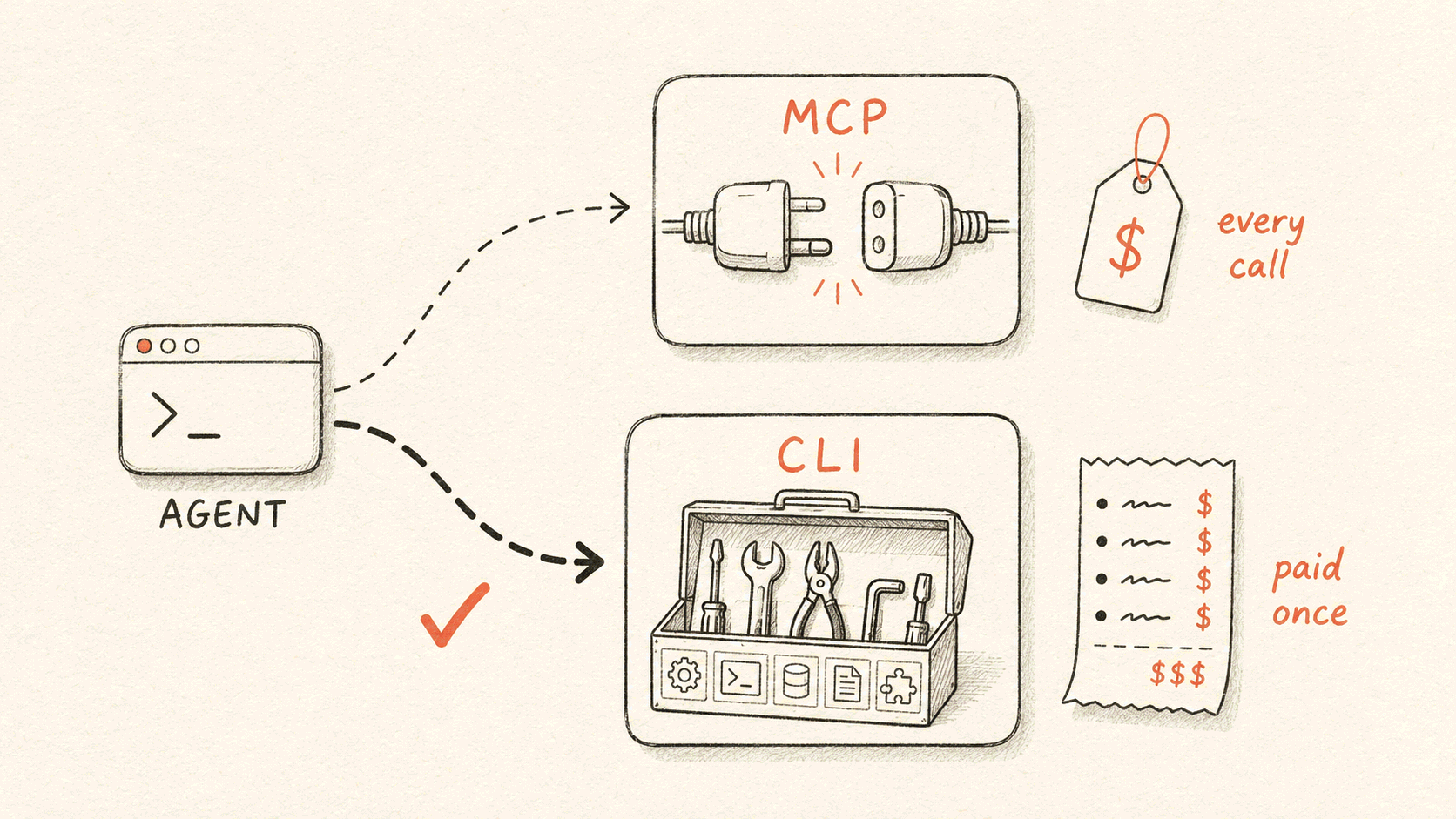
From MCP to a CLI: If you own the platform, give your agent a CLI
In January, our AI SRE operated Flashduty through a built-in MCP server. By late May, we replaced it with a generated CLI. This post explains why we didn't expand the MCP server, why we chose not to use search-based loading, and what the switch cost.
Flashduty Engineering
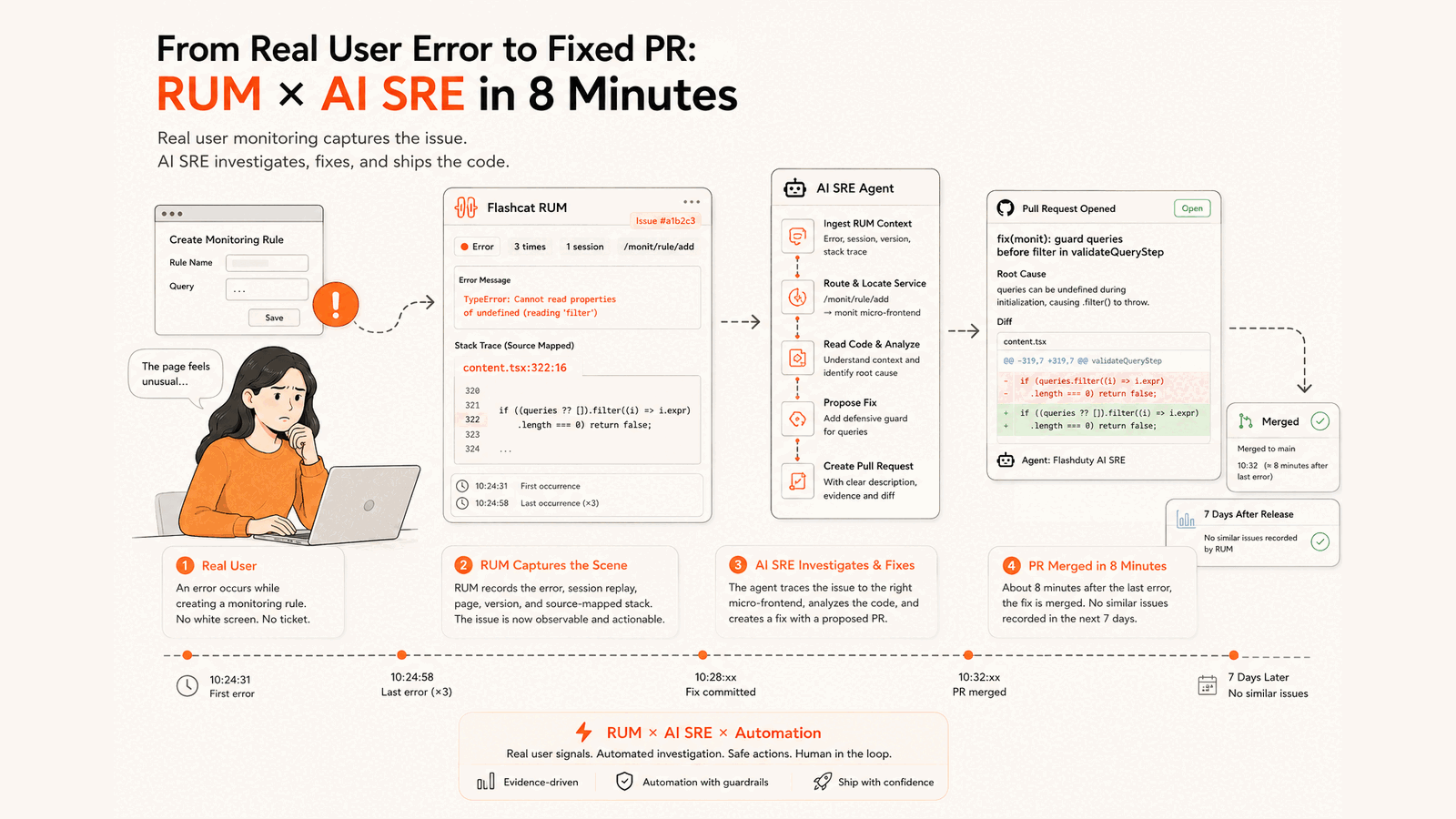
From a real user error to a fix PR in 8 minutes: RUM × AI SRE
A user hit three frontend errors while creating a monitoring rule. RUM preserved the session, version, and SourceMap stack; AI SRE located the right repository, made a one-line fix, and opened a PR.
Flashduty Engineering
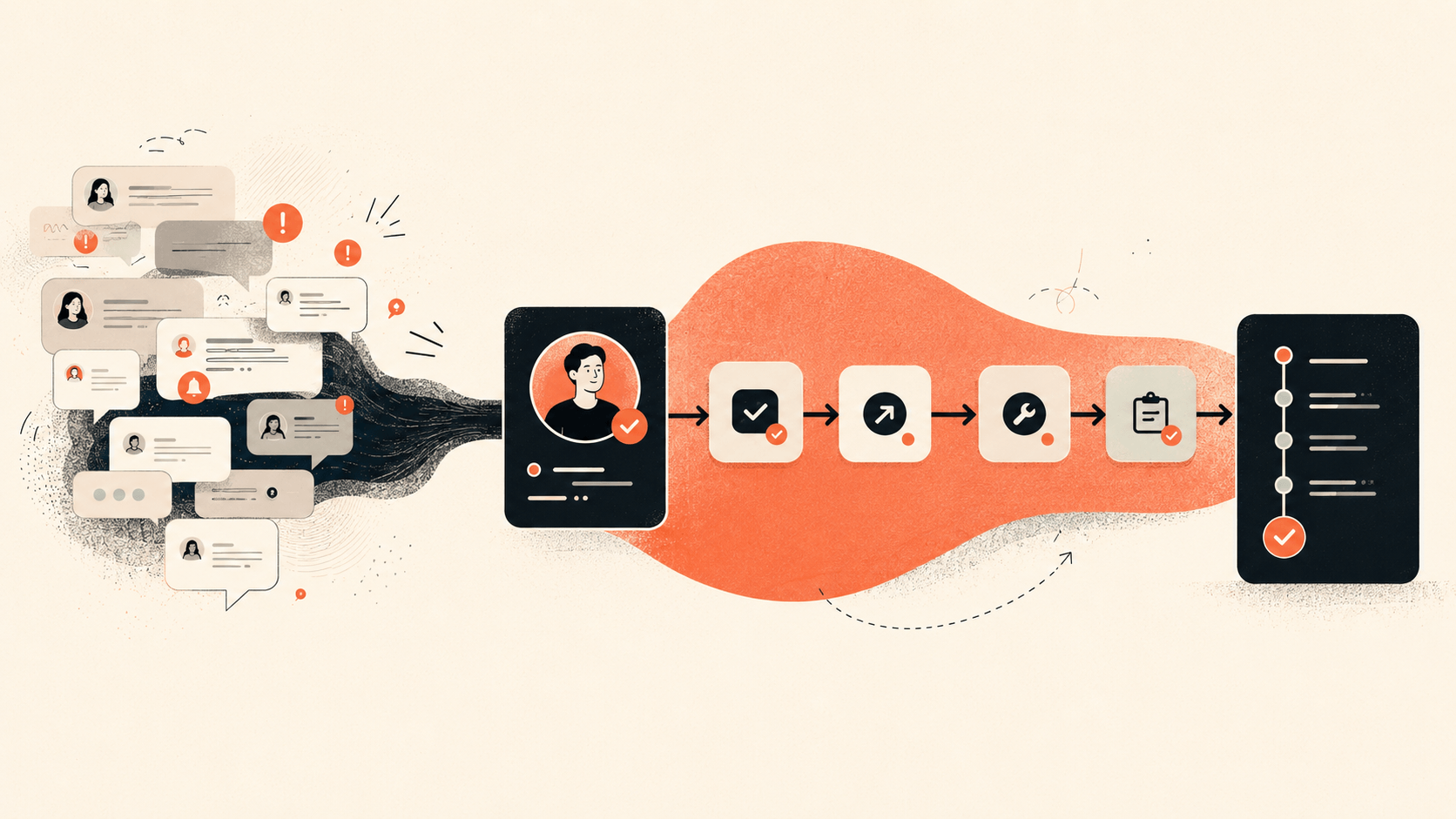
Sending alerts to a group chat doesn't mean anyone owns the incident
A group chat bot makes alerts visible, but it doesn't assign an owner. Incident response needs an owner, acknowledgment, escalation, closure, a timeline, and a review. Here's a quick self-check: audit your last 10 critical alerts.
Flashduty Product
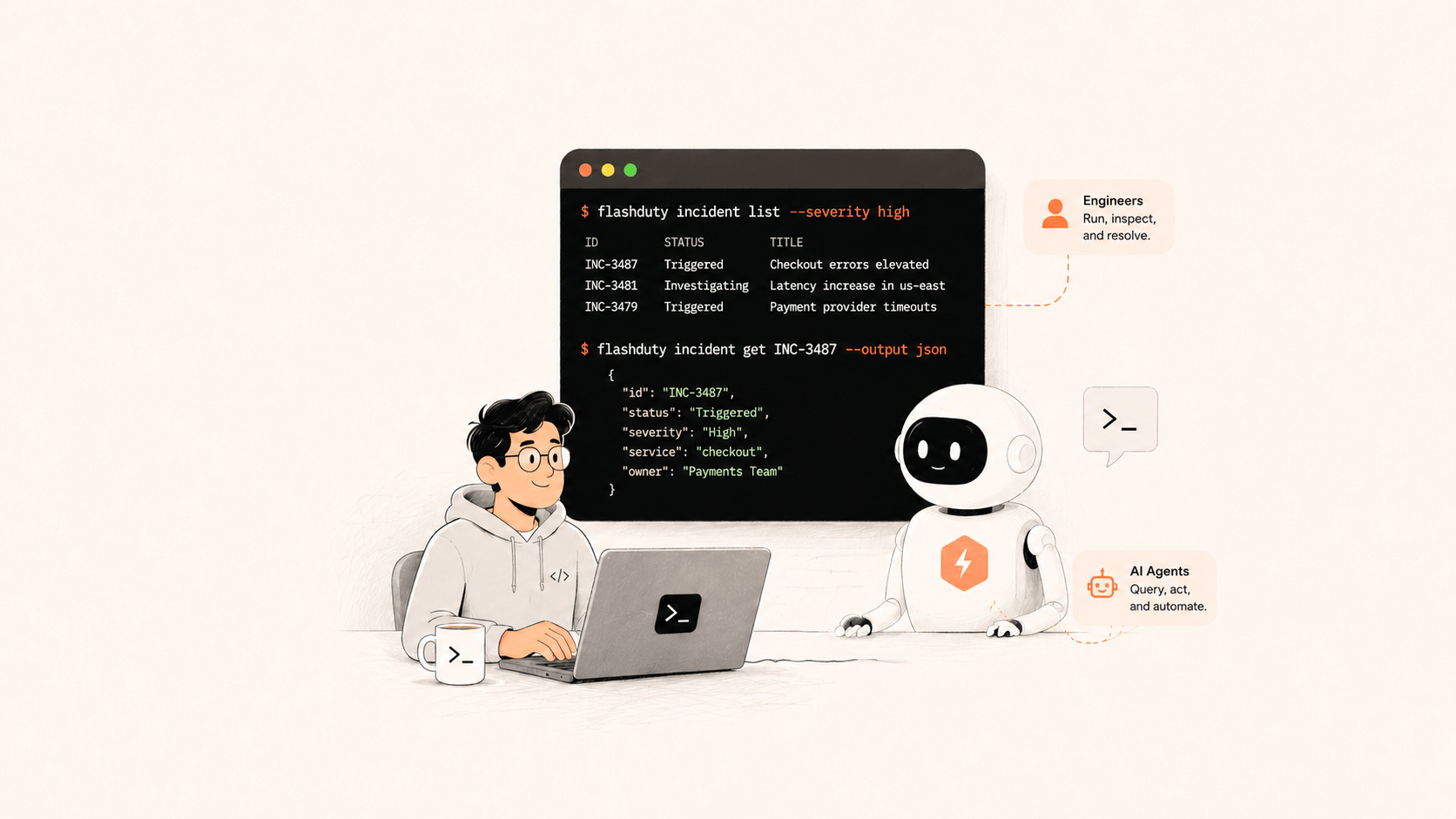
flashduty-cli: Handle incidents from the terminal and let coding agents do it safely
Why an incident response platform builds a command-line interface (CLI), and why the CLI is how AI coding agents operate Flashduty. An engineering note on the design tradeoffs.
Flashduty Engineering
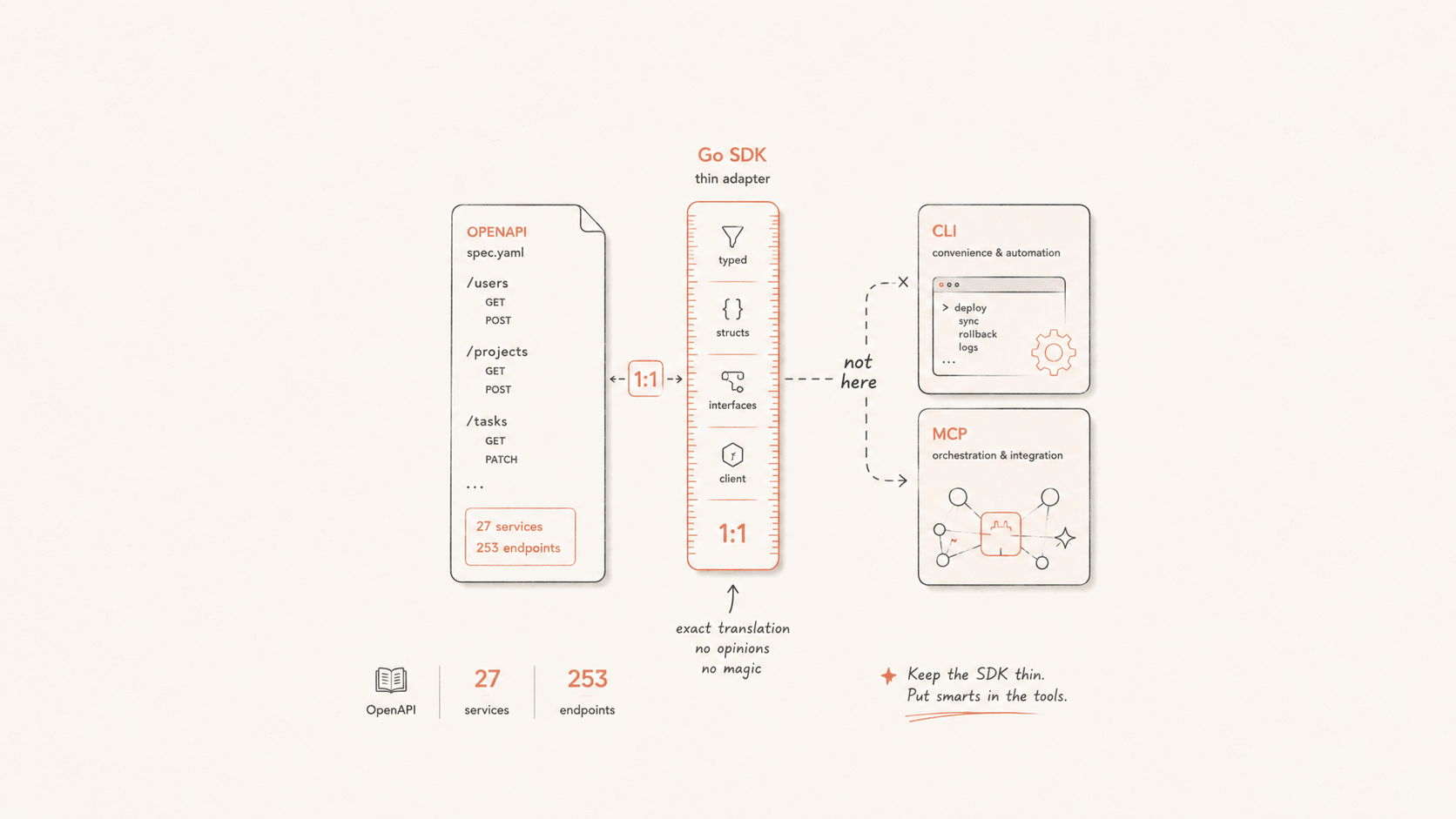
An SDK shouldn't be smarter than its API: Three design rules behind go-flashduty
go-flashduty is the official Go client for the Flashduty Open API. It's thin, strongly typed, and generated from an OpenAPI spec. This post explains how we design and maintain an SDK that covers 27 services and 253 endpoints, and why we generate code, keep a strict 1:1 boundary with the API, and let that boundary prevent drift.
Flashduty Engineering
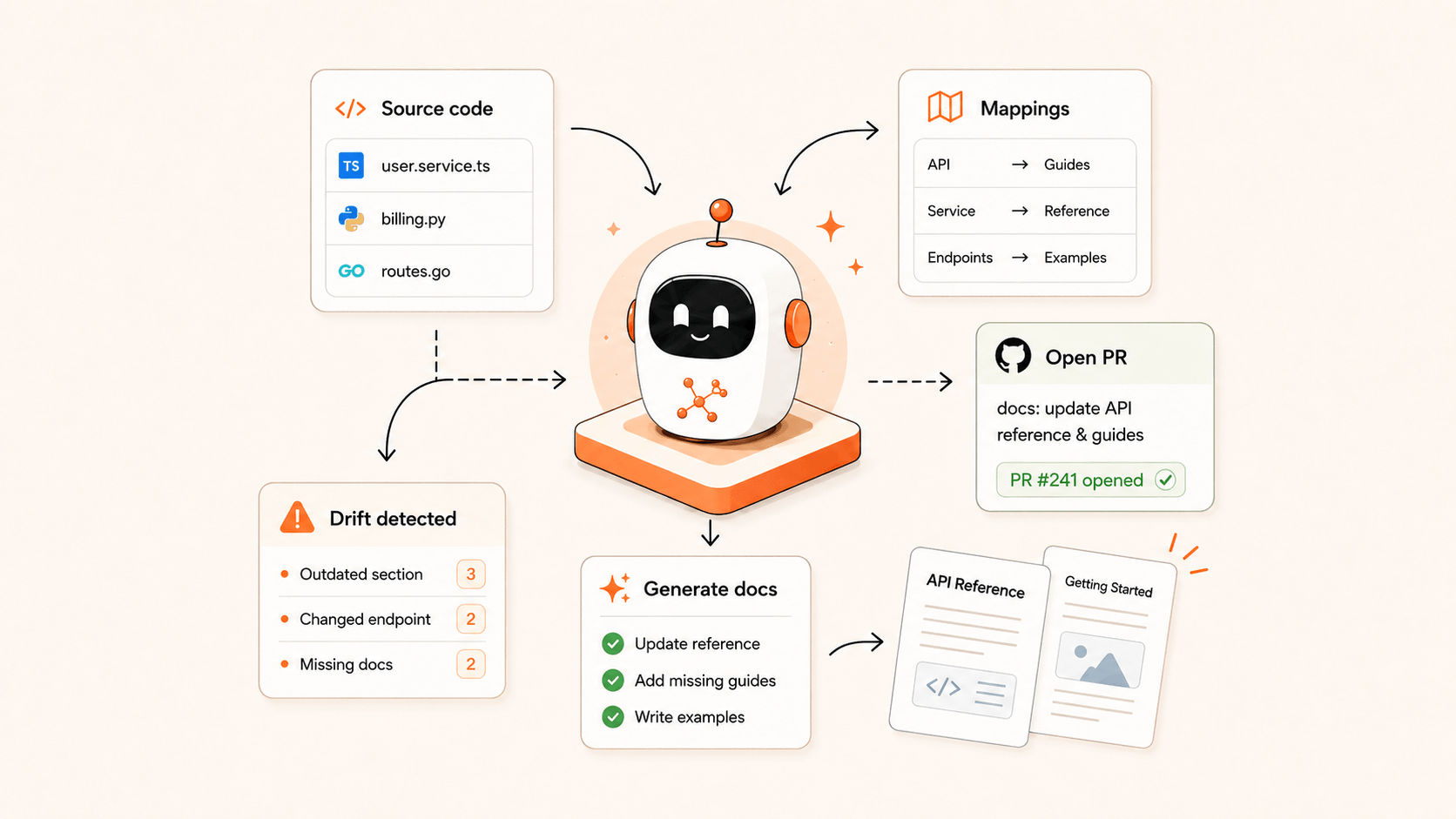
We stopped writing docs by hand
A small team with no dedicated product manager built an AI agent that finds documentation gaps, writes the missing docs, and opens pull requests. The fix was to make drift visible instead of reminding engineers to write docs.
Flashduty Engineering
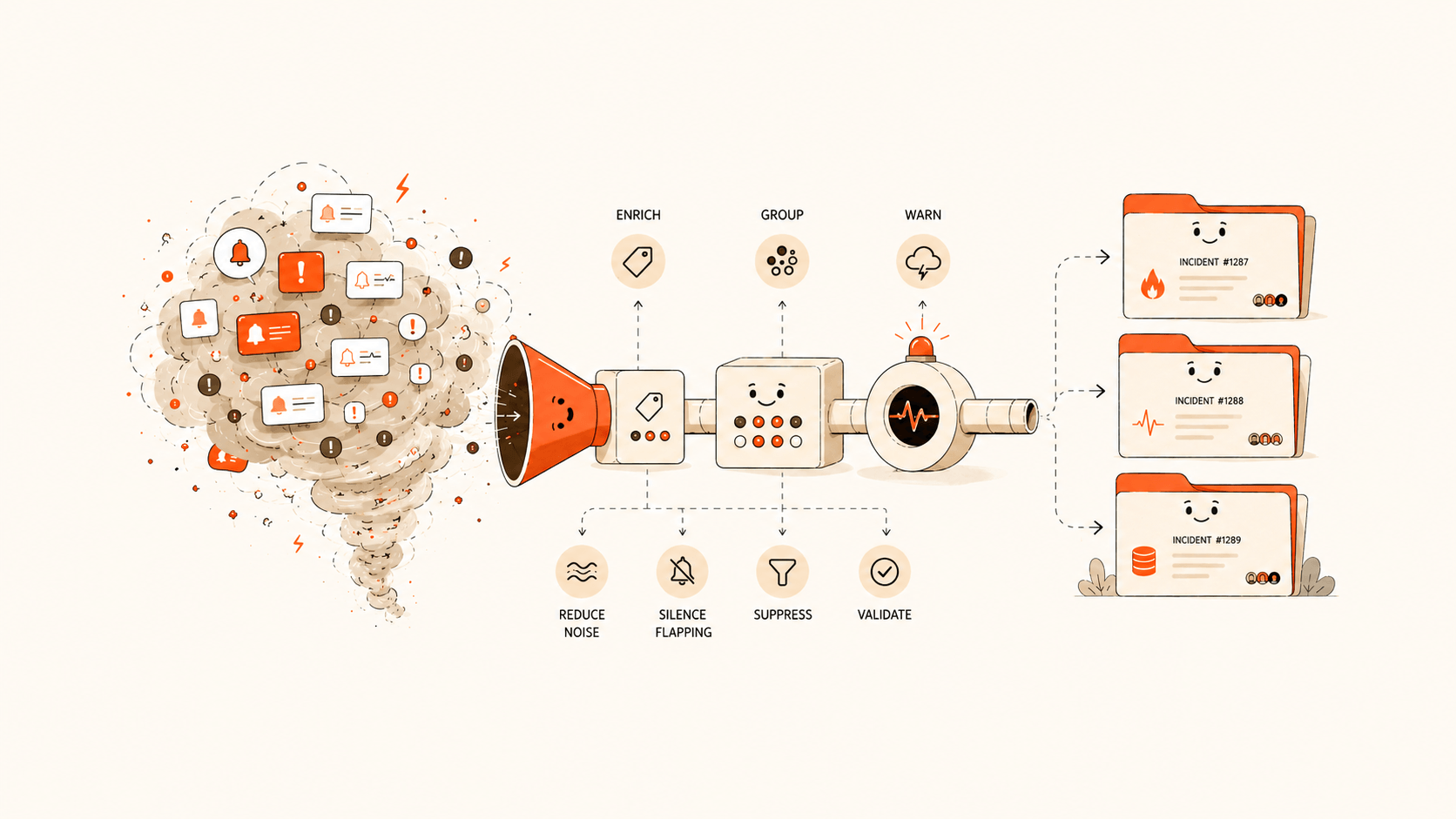
Alert storm noise reduction: Turn floods of alerts into incidents you can handle in 14 days
Noise reduction means converging many alerts into a few incidents you can act on, not deleting alerts. This playbook gives a 14-day plan, a reusable configuration template, and the metrics that show whether it worked.
Flashduty Support
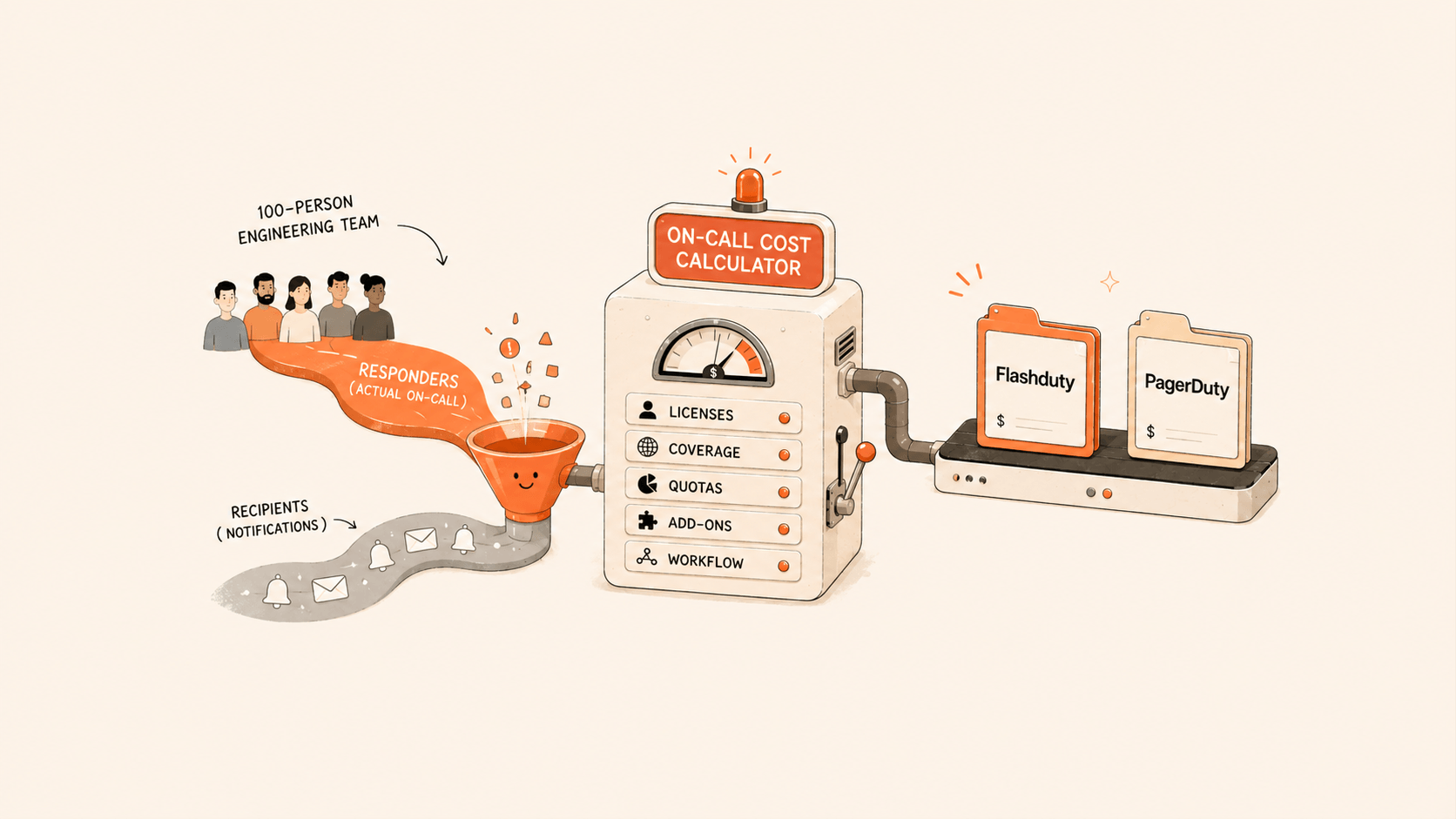
PagerDuty vs Flashduty cost for a 100-person team: It depends on who you pay for
A sourced on-call cost model as of October 2026. Separate responders from notification-only users, then compare PagerDuty full seats, PagerDuty Stakeholder licenses, and Flashduty responder licenses.
Flashduty Product
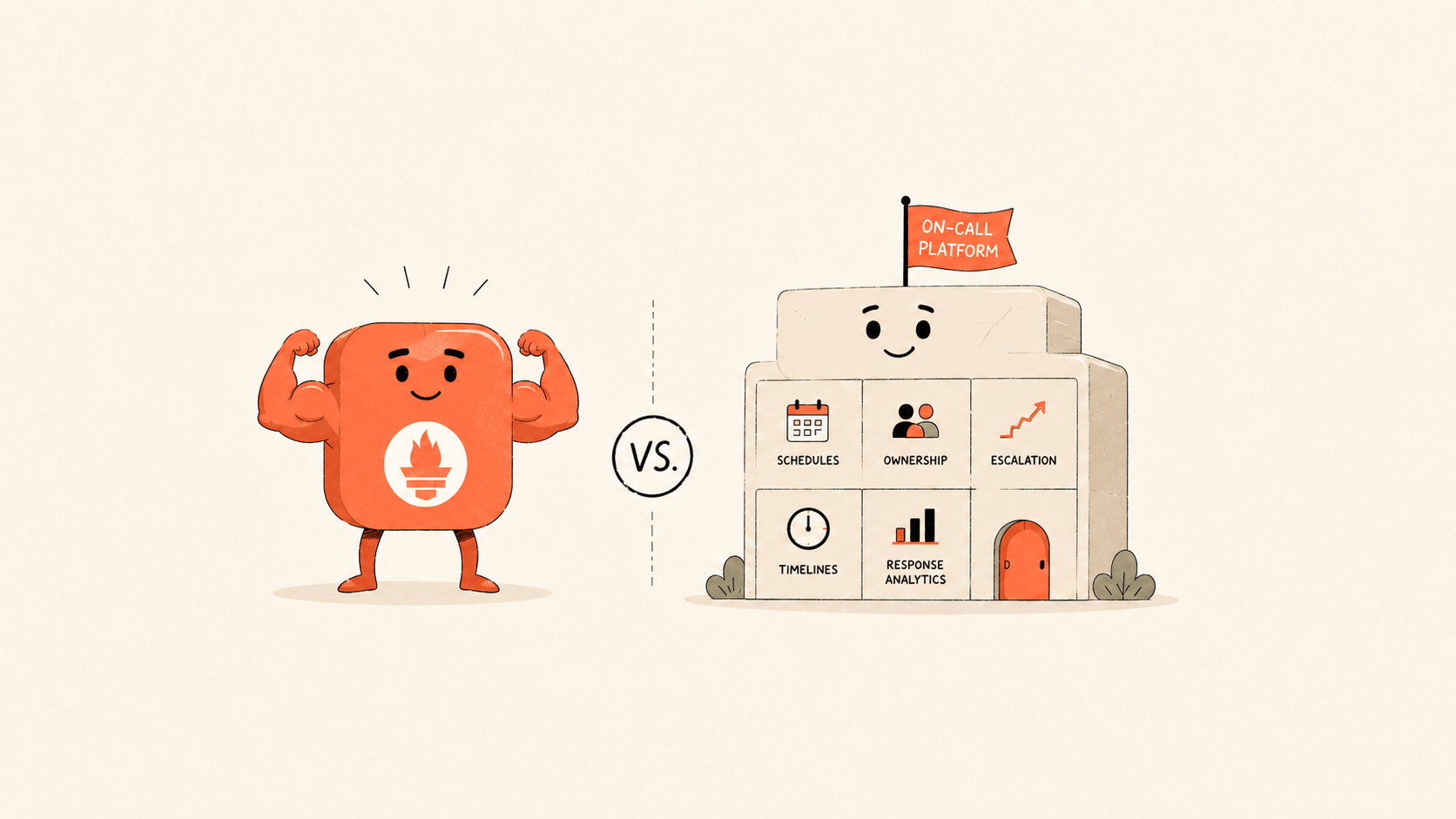
Is Alertmanager enough? A table to decide whether you need an on-call platform
Alertmanager routes alerts. An on-call platform manages incident response. This post gives a comparison table and two checklists that show when Alertmanager is enough, when to add an on-call platform after it, and how to connect it to Flashduty.
Flashduty Product
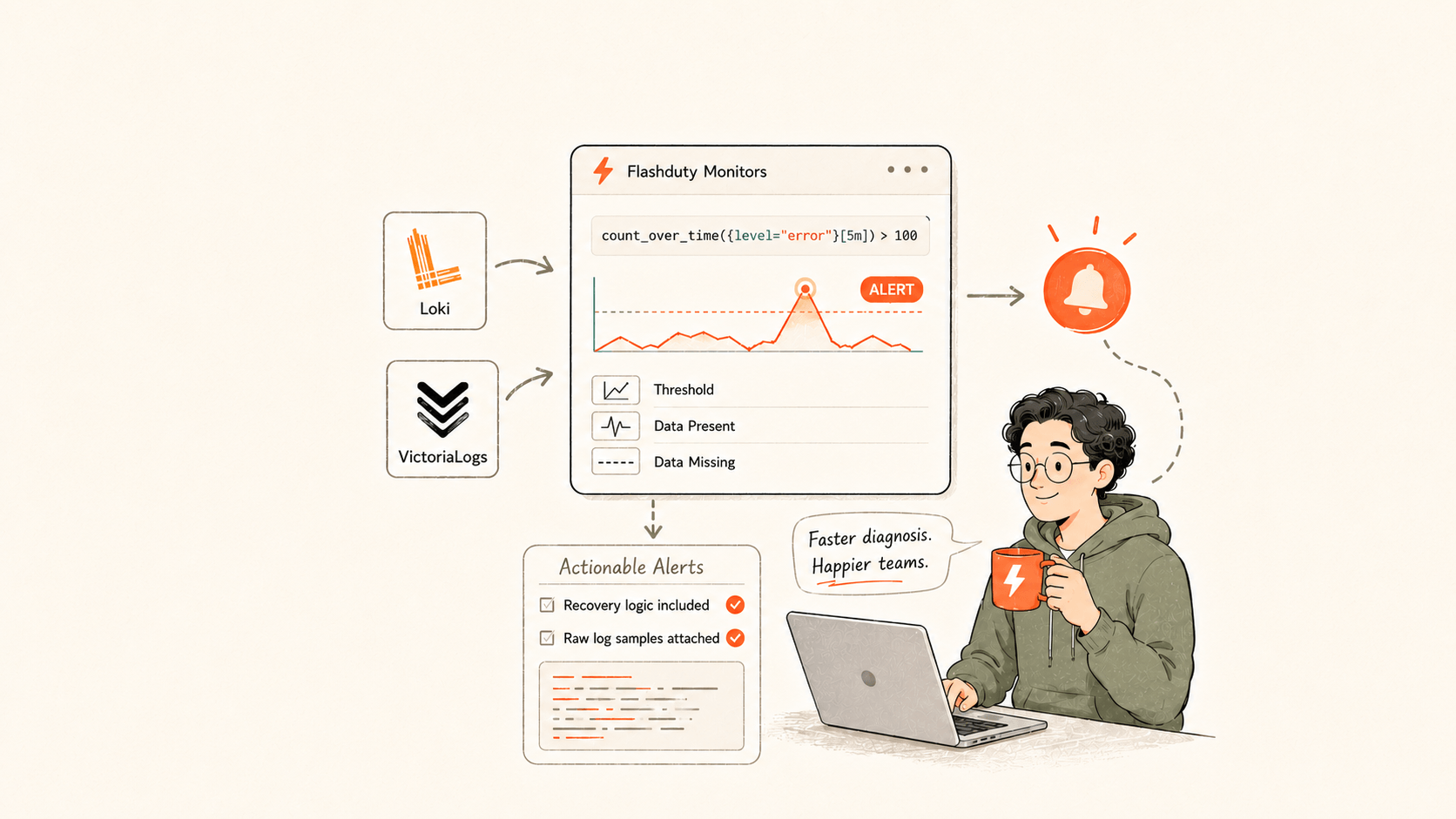
Alert on your existing Loki and VictoriaLogs queries with Flashduty Monitors
Flashduty Monitors supports Grafana Loki and VictoriaLogs with native query syntax, three alerting modes, separate recovery logic, and raw log samples in alert messages.
Flashduty Engineering
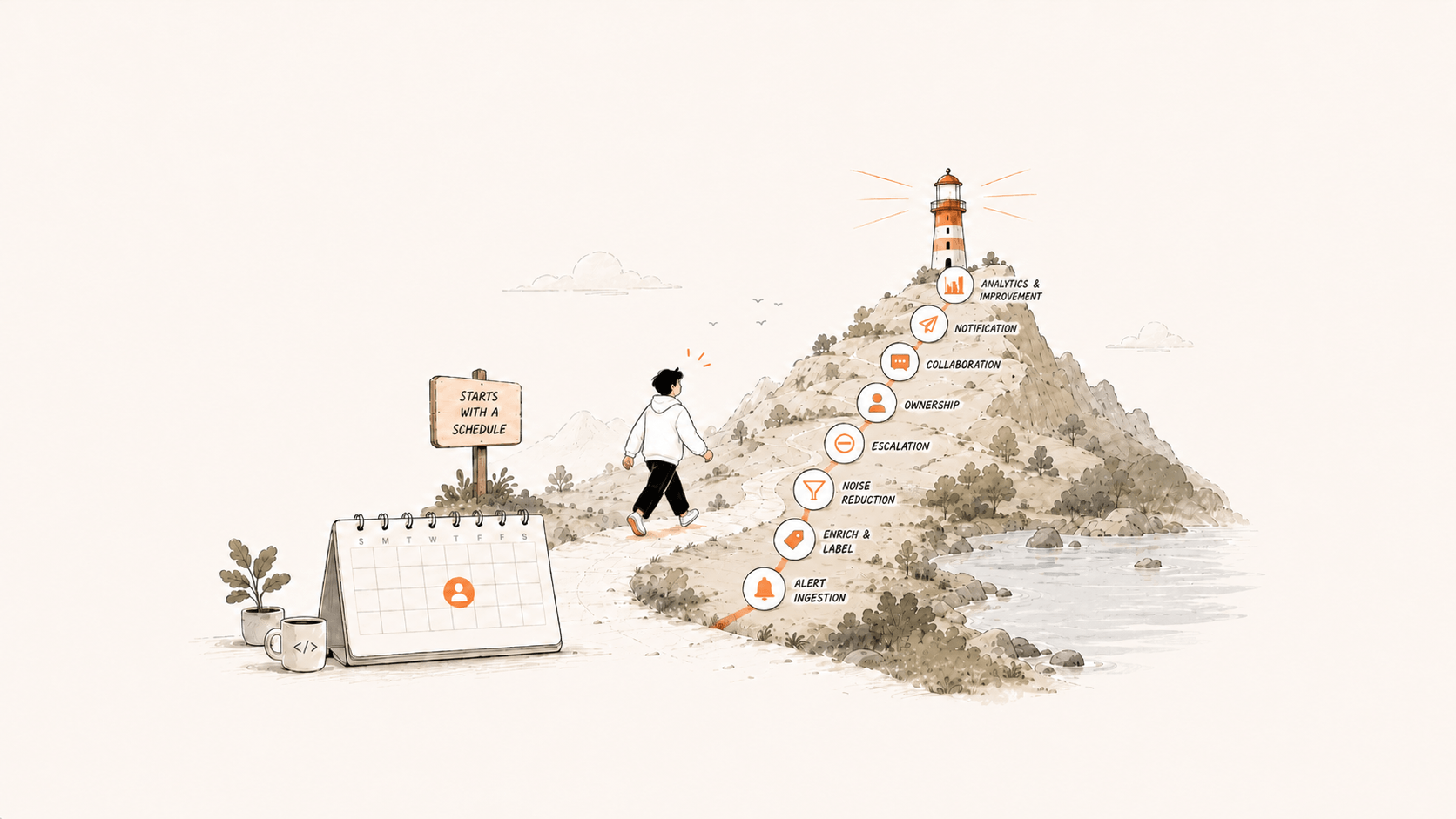
The eight stages of an on-call system: How far to take each one
On-call is much more than scheduling. From alert ingestion to analytics, this post covers why each of eight stages exists, how far to take it, and where it goes wrong. The cheapest noise reduction happens before an alert fires.
Flashduty Product
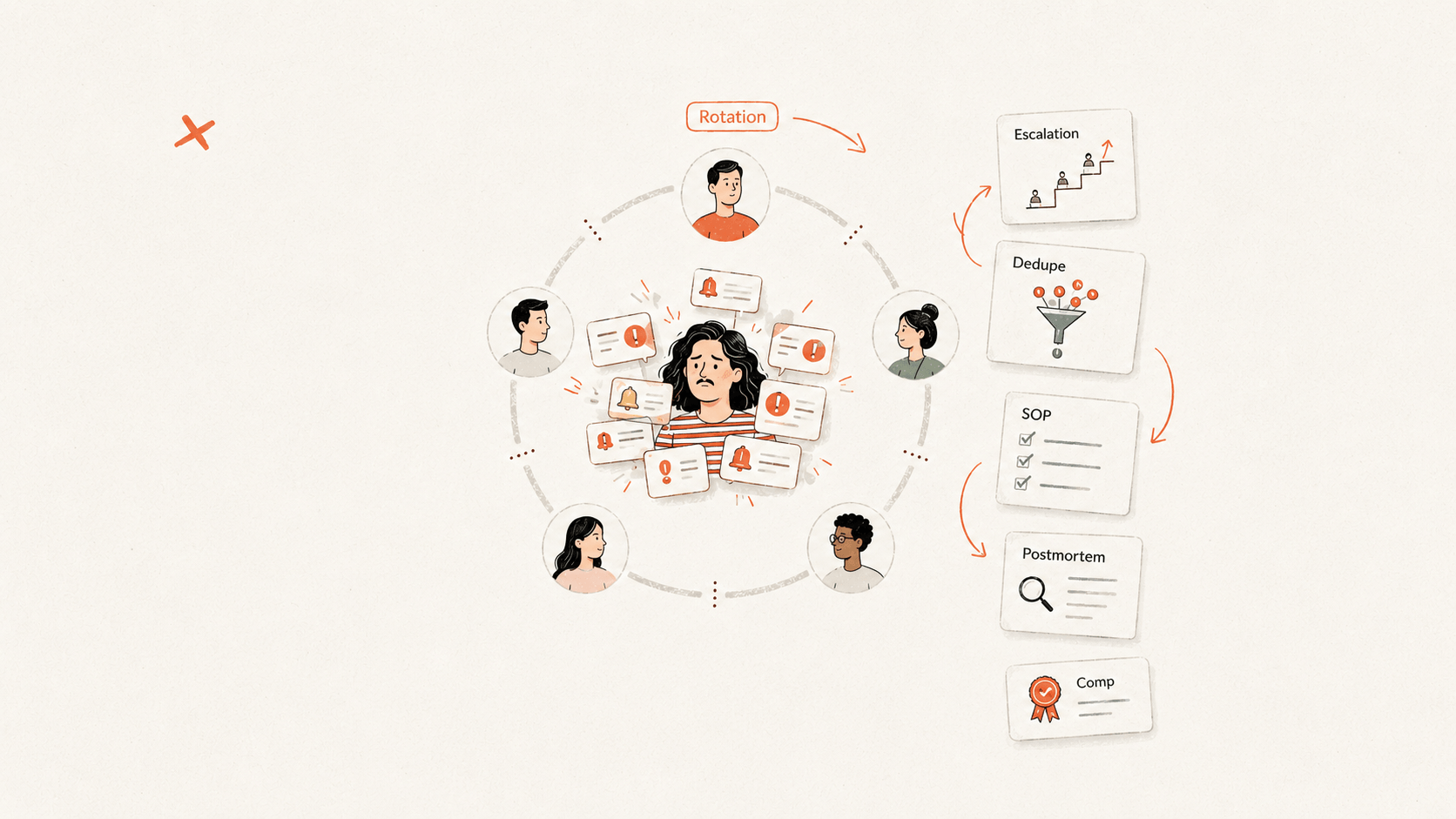
On-call in the futures industry: Managing tens of thousands of alerts a week
The ops team at a Shanghai futures company handles tens of thousands of alerts a week. Their approach has four parts: one unified platform, an on-call process, CMDB metadata, and ongoing measurement with MTTA and MTTR. Based on a talk at the CCF Nightingale forum.
Flashduty Support

Don't let on-call burn out your most responsible engineer
Many teams say everyone is on call, but the most responsible person takes most shifts, gets an average review, and quits. Here are six practices that make on-call fair and sustainable, plus six common anti-patterns.
Flashduty Product
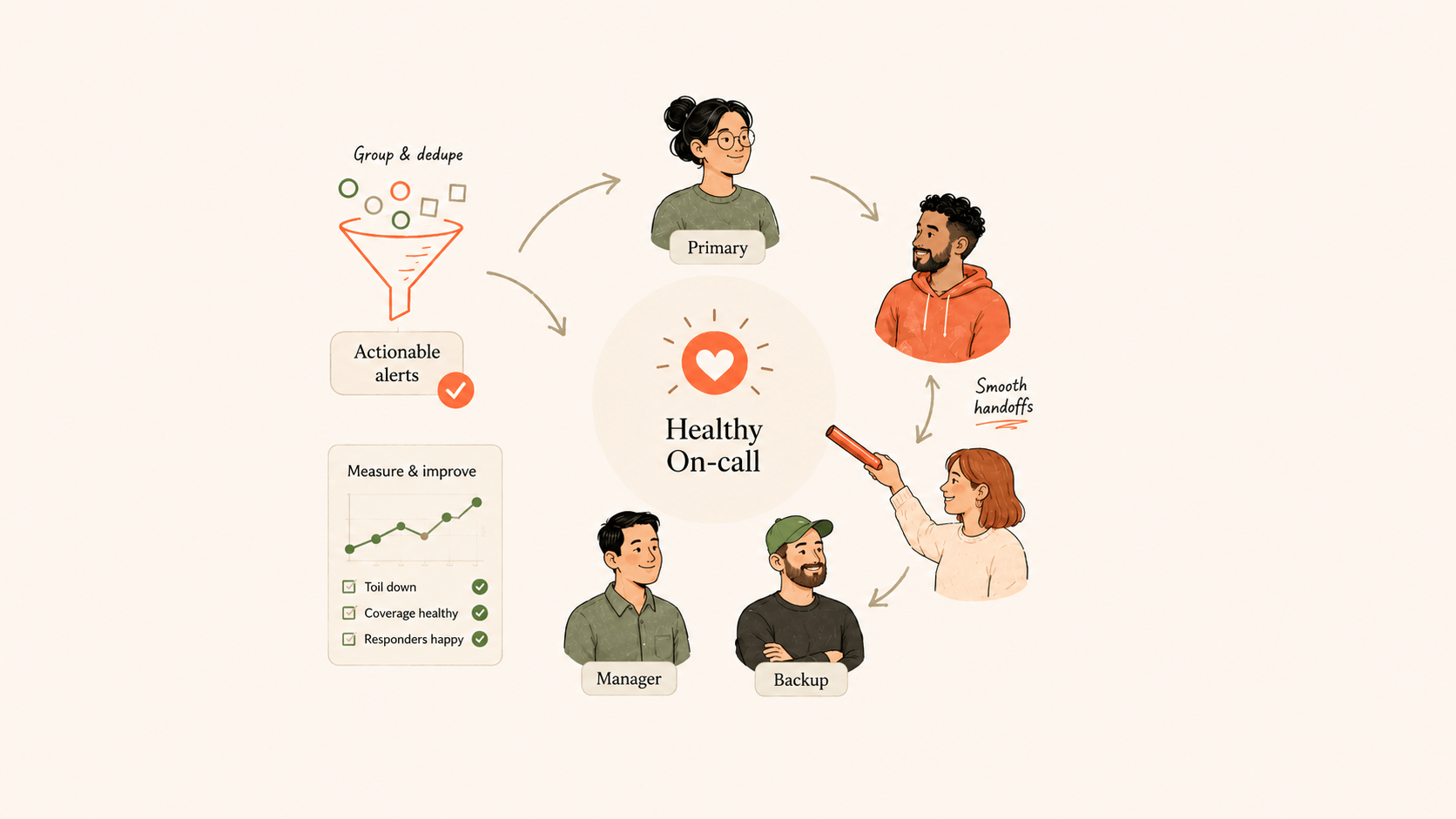
On-call at Google and Datadog: Tools are easy to copy, schedules and metrics are the hard part
Google never open-sourced its on-call tool, Outalator, but tooling isn't the hard part of on-call. Google SRE and Datadog put their effort into a cap on toil, sustainable schedules, and metrics. Here's how each approach works, plus three first steps that need no extra budget.
Flashduty Product