
Introduction
In today's fast-moving IT environment, organizations increasingly depend on monitoring and incident-management tooling to protect business continuity and service stability. As monitoring systems expand, the number of alerts and event notifications grows with them, creating a major challenge for IT teams. Ensuring that every alert is captured, routed accurately, and handled effectively has become essential to service quality.
The following signs usually mean an organization should introduce or upgrade its On-call tooling:
- End-to-end tracking and resolution: every incident should be tracked, handled, and resolved before it expands into a larger loss.
- A formal on-call mechanism: define primary and backup responders, share responsibility fairly, and avoid flooding the whole team.
- Better response efficiency: when SREs or developers spend more than 25% of their time on On-call work, tooling should reduce noise and improve efficiency.
- Measurable operations: use incident handling time and responder load metrics to drive continuous reliability improvement.
So what should you evaluate when buying an On-call service? This guide compares the questions IT leaders should ask across product, service, and pricing, with Flashduty and PagerDuty used as representative vendors.
Product
Integration Capabilities
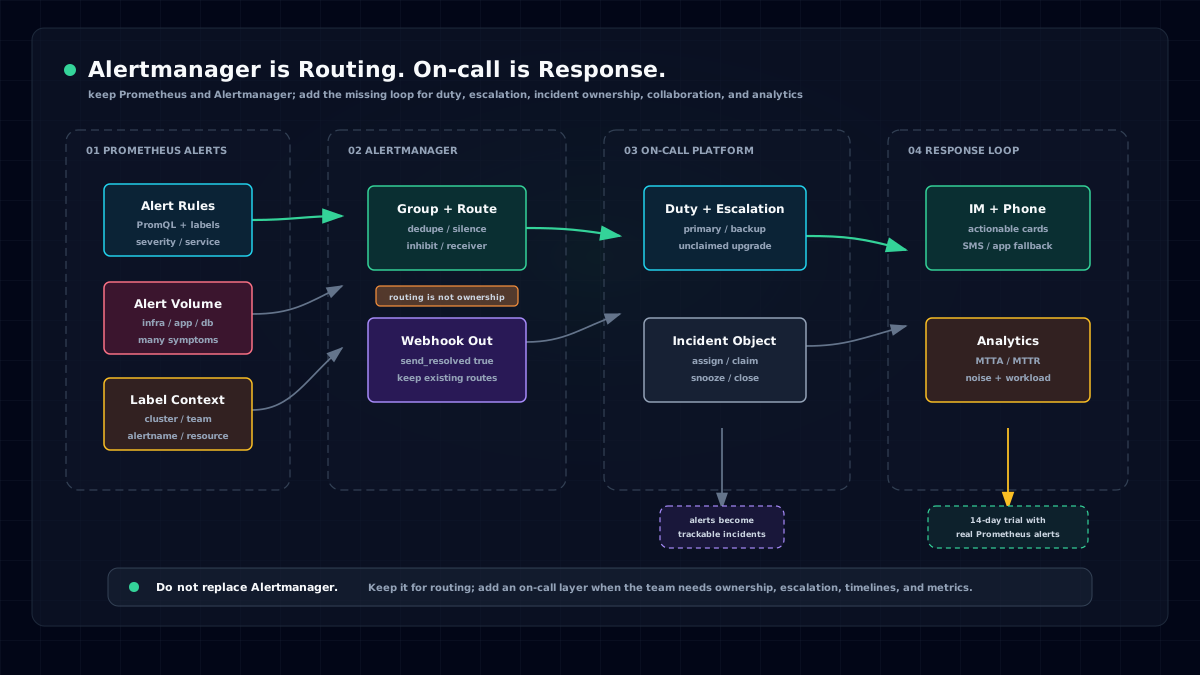
An incident management system is the processing center for alerts and incidents. It stores alert and incident data, and should support strong inbound and outbound integration so it can connect with other systems and workflows, accelerate response, and improve collaboration.
| Product capability | Questions to ask | Flashduty vs. PagerDuty |
|---|---|---|
| Alert integrations | 1. Does it support the alert systems you use? 2. Does it support custom alert integrations, such as reporting data from internal scripts through standard protocols? 3. Does it support email integrations to trigger or close incidents? 4. Does it support change-event integrations? Incidents are often caused by changes, and change context helps troubleshooting. 5. Is the integration documentation easy to find, clear, and sufficient for self-service setup? | Flashduty ✅, PagerDuty ✅ PagerDuty supports most overseas monitoring tools. Flashduty supports mainstream monitoring tools in China and overseas, and also supports the PagerDuty protocol so some tools can send data to Flashduty in PagerDuty format. |
| Webhooks | 1. Can incident operations be pushed outward through Webhooks for internal workflows or tools? 2. Can teams subscribe by event type or source, such as subscribing only to dispatch events for the order system? | Flashduty ✅, PagerDuty ✅ |
| Open APIs | Does it provide rich Open APIs so customers can manipulate platform entities through API? | Flashduty ✅, PagerDuty ✅ Both provide rich APIs and documentation. |
Incident Handling
Incident handling is the core operation of the system. Evaluate both feature richness and flexibility.
| Product capability | Questions to ask | Flashduty vs. PagerDuty |
|---|---|---|
| Alert routing | 1. Does it support dedicated integrations that route directly to a service or workspace without additional routing? 2. Does it support shared integrations and flexible routing rules? | Flashduty ✅, PagerDuty ✅ PagerDuty mainly uses shared integration_key concepts rather than Flashduty-style shared integrations. Flashduty can configure routing rules on the integration page; PagerDuty generally needs Event Orchestration or Workflow for similar behavior. |
| Information enrichment | Can custom fields be added with defined types and enum values to extend incident information? | Flashduty ✅, PagerDuty ✅ |
| Can new labels be extracted from existing information with regex? Example: extracting data-center information from a hostname. | Flashduty ✅, PagerDuty ✅ | |
| Can new labels be generated by combining existing information? Example: generating a Runbook URL from service and alert policy. | Flashduty ✅, PagerDuty ✅ | |
| Can imported data tables dynamically generate labels? Example: importing CMDB data and mapping host IPs to owners. | Flashduty ✅, PagerDuty ❌ Flashduty supports flexible data mapping. | |
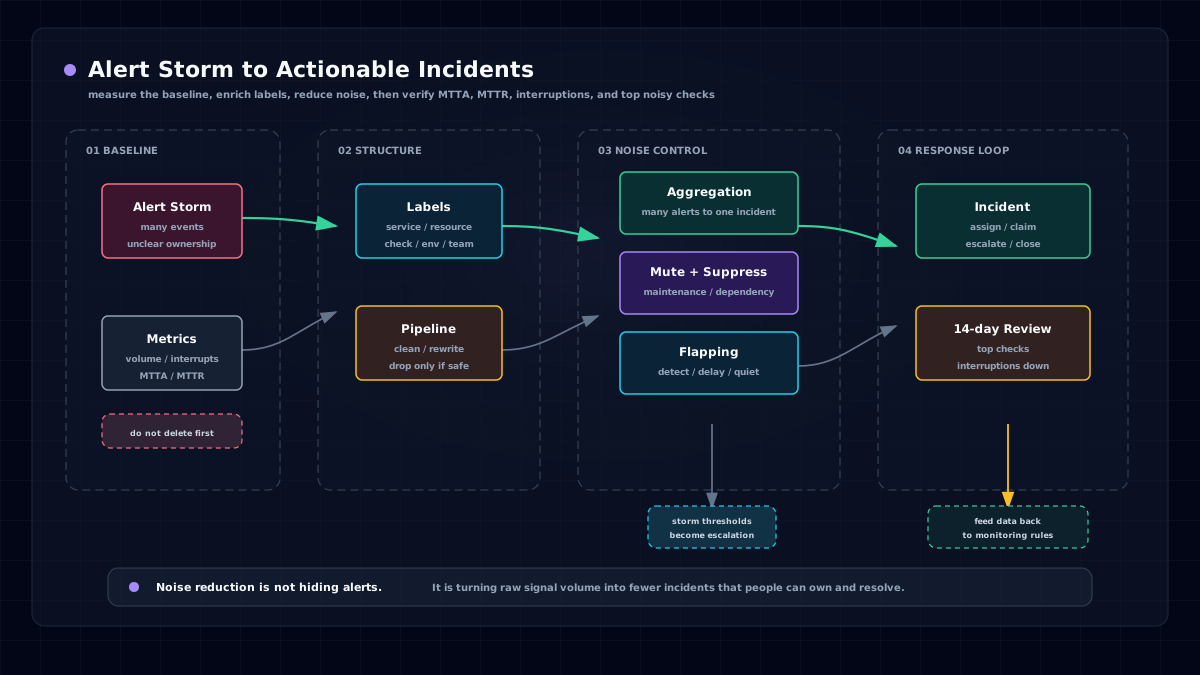
| Alert noise reduction | Can alerts be grouped into incidents? 1. Can similar alerts be grouped for unified dispatch, notification, and handling to reduce alert fatigue? 2. Can grouping use a time window? 3. Is AI-based grouping supported? | Flashduty ✅, PagerDuty ✅ PagerDuty supports intelligent grouping and policy grouping. Flashduty supports fine-grained policy grouping. |
| Does it support incident silencing, such as suppressing notifications during market closure or maintenance windows? | Flashduty ✅, PagerDuty ✅ | |
| Does it support incident suppression, such as suppressing Pod incidents when the host has failed? | Flashduty ✅, PagerDuty ❌ | |
| Does it support storm warnings, such as sending an additional notification when an incident groups too many alerts? | Flashduty ✅, PagerDuty ❌ | |
| Does it support flapping convergence, reducing notifications when the same incident repeatedly triggers and recovers? | Flashduty ✅, PagerDuty ❌ | |
| Does it support delayed notification, waiting one window before notifying so incidents that recover immediately do not interrupt responders? | Flashduty ✅, PagerDuty ✅ | |
| Incident dispatch | Can incidents be dispatched by policy? 1. Can they be dispatched to schedules, teams, or individuals? 2. Can group-chat and direct-message notification methods be configured together? | Flashduty ✅, PagerDuty ✅ Flashduty additionally supports dispatching to teams and configuring notification methods at the incident-policy level. PagerDuty tends to configure direct/group notification globally rather than per incident. |
| Can dispatch match conditions? 1. Can multiple dispatch policies be matched by weight or priority? | Flashduty ✅, PagerDuty ❌ PagerDuty supports one escalation policy under a service. Flashduty supports multiple dispatch policies under one workspace, each active under different times or incident scopes. | |
| Can unresolved incidents automatically escalate? Can responders manually escalate? | Flashduty ✅, PagerDuty ✅ | |
| Can dispatch dynamically use parameters or labels? 1. Replace assignees from labels to reduce integration cost? 2. Replace group-chat targets from labels to reduce configuration maintenance? | Flashduty ✅, PagerDuty ❌ | |
| Incident processing | Can users manually create incidents? | Flashduty ✅, PagerDuty ✅ |
| Does it support acknowledgement, closure, comments, snooze, and merge? 1. Does it support timeout auto-close? 2. Does it support auto-cancel for snooze timeout? | Flashduty ✅, PagerDuty ✅ | |
| Does it support postmortems? | Flashduty ❌, PagerDuty ✅ | |
| Does it support similar incidents? | Flashduty ❌, PagerDuty ✅ | |
| Does it provide detailed operation logs? | Flashduty ✅, PagerDuty ✅ | |
| Can incidents be reassigned? | Flashduty ✅, PagerDuty ✅ | |
| Can custom actions be added to incidents, such as manually triggering host restart for self-healing? | Flashduty ✅, PagerDuty ✅ | |
| Can a closed incident be reopened and notify responders again? | Flashduty ✅, PagerDuty ❌ | |
| Can custom fields be added, such as false-positive labels or meeting links? | Flashduty ✅, PagerDuty ✅ Both support multiple custom field types. Flashduty can search incidents by fields. PagerDuty mainly shows field settings in incident details. | |
| Does it provide strong search? | Flashduty ✅, PagerDuty ❌ Flashduty supports search by labels, custom fields, titles, and people; exact, wildcard, and regex matching; card-angle views; and custom rendering in incident lists. | |
| Incident analytics | Can it count incidents and events by time, team, service, and other dimensions? | Flashduty ✅, PagerDuty ✅ |
| Can it measure handling metrics such as MTTA and MTTR by time, team, and service? | Flashduty ✅, PagerDuty ✅ | |
| Can it measure responder metrics, such as MTTA or incident count by person? | Flashduty ✅, PagerDuty ✅ | |
| Can it show the most frequent hosts and policies causing incidents? | Flashduty ✅, PagerDuty ❌ | |
| Can it count how much time people spend handling incidents? | Flashduty ❌, PagerDuty ✅ | |
| Does it support custom reports? | Flashduty ❌, PagerDuty ❌ | |
| Does it support scheduled report delivery? | Flashduty ❌, PagerDuty ❌ | |
| Does it support large-screen dashboards? | Flashduty ❌, PagerDuty ❌ | |
| Can detailed data be downloaded? | Flashduty ❌, PagerDuty ✅ |
Platform Capabilities
Platform capabilities cover member management, on-call response, notification channels, audit, and single sign-on. More notification channels and stronger localization generally improve rollout, while schedule management should handle special organizational scenarios.
| Product capability | Questions to ask | Flashduty vs. PagerDuty |
|---|---|---|
| Schedule management | Does it support daily, weekly, or custom-cycle rotations? | Flashduty ✅, PagerDuty ✅ |
| Can the active hours inside a rotation cycle be limited? | Flashduty ✅, PagerDuty ✅ | |
| Can different time ranges use different rotation rules? | Flashduty ✅, PagerDuty ✅ Flashduty can configure cycle end time. | |
| Does it support temporary swaps? | Flashduty ✅, PagerDuty ✅ | |
| Does it support on-call roles such as primary and backup? | Flashduty ✅, PagerDuty ❌ | |
| Does it support multiple people on call together and rotating together? | Flashduty ✅, PagerDuty ❌ | |
| Does it support fair rotation? For example, if seven people rotate daily, is it fair if one person is always on Sunday? | Flashduty ✅, PagerDuty ❌ | |
| Can rotation-change notifications, including advance notices, be configured? | Flashduty ✅, PagerDuty ✅ Flashduty supports more notification methods. | |
| Can the on-call calendar be exported? | Flashduty ❌, PagerDuty ✅ | |
| Notification channels | Does it support voice and SMS in China? | Flashduty ✅, PagerDuty ✅ PagerDuty support can be limited and unstable. |
| Does it support fixed caller ID? | Flashduty ✅, PagerDuty ✅ | |
| Does it support email notification? | Flashduty ✅, PagerDuty ✅ | |
| Does it support mainstream IM apps in China? | Flashduty ✅, PagerDuty ✅ Flashduty supports Feishu, DingTalk, and WeCom app integrations. | |
| Does it support mainstream overseas IM apps? | Flashduty ✅, PagerDuty ✅ Both support Slack and Microsoft Teams apps. Flashduty additionally supports Zoom and Telegram bots. | |
| Does it provide a mobile App? | Flashduty ❌, PagerDuty ✅ | |
| Does it support custom notification templates? | Flashduty ✅, PagerDuty ❌ Flashduty supports rich template syntax. | |
| Single sign-on | Does it support SSO? Which protocols? | Flashduty ✅, PagerDuty ✅ Flashduty supports SAML and OIDC; PagerDuty supports SAML and OAuth2. |
| Audit logs | Does it support operation audit logs? | Flashduty ✅, PagerDuty ✅ |
Pricing
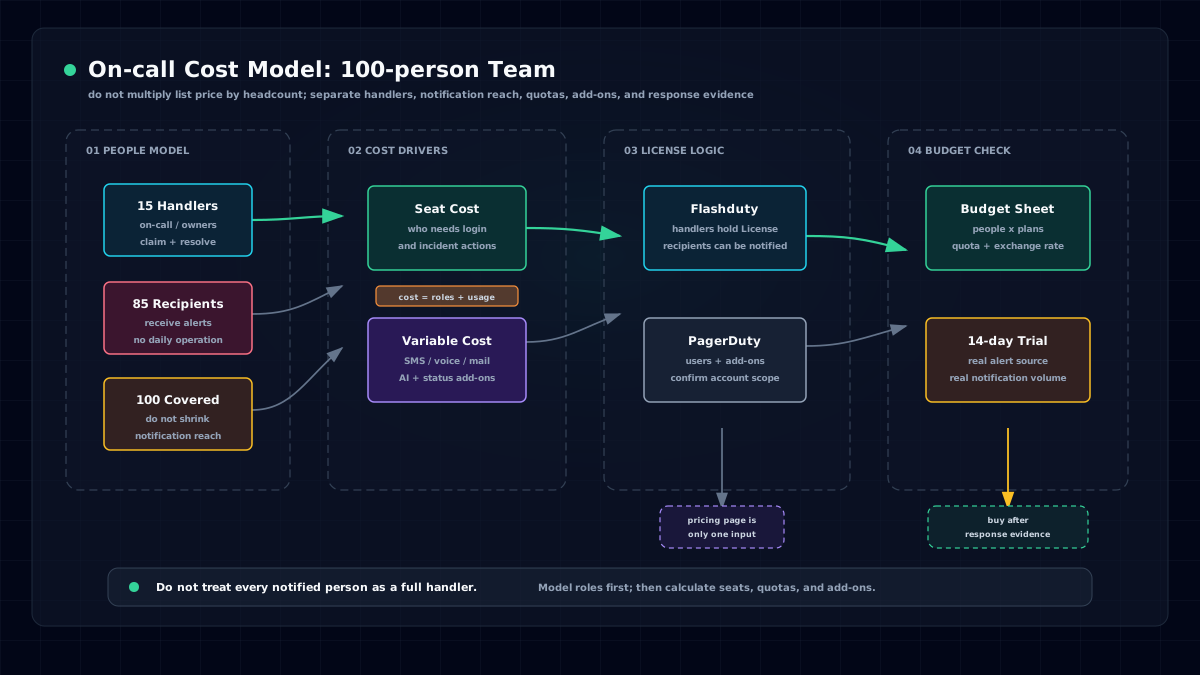
Vendors usually provide multiple subscription options. The practical question is which option has the best value while still meeting your requirements. Budget predictability and pricing-model simplicity both matter.
| Comparison item | Flashduty | PagerDuty |
|---|---|---|
| Pricing page | price.flashcat.cloud | price.pagerduty.com |
| Billing model | Seat fee + over-quota communication fees | Seat fee + Add-ons |
| Plan structure | Professional ¥199/user/month, full-featured | Business $41/user/month, with Add-ons billed separately such as AIOps |
| Charges only active users? | Yes. Active users are members who view or handle incidents in the month; receiving notifications only does not count as active usage. | No. Incident handling requires a Full License; notification-only users require Stakeholder License packs, sold from 50 users at $3/user/month. |
| Free trial | Professional 14-day trial; completing setup can add another 14 days, for 28 days total | Business 14-day trial |
Service
Service evaluation should focus on response method and response speed. Instant messaging support is usually far better than slower channels.
| Comparison item | Flashduty | PagerDuty |
|---|---|---|
| Email support? | ✅ | ✅ |
| Dedicated support? | ✅, dedicated IM support group | Purchased separately |
| Expert remote support? | ✅, remote meetings for issue resolution | Purchased separately |
| Service hours | Standard: 5×8; Professional: 7×8 | Unknown |
| Status Pages? | Yes, status.flashcat.cloud | Yes, status.pagerduty.com |
| Roadmap? | Yes, roadmap.flashcat.cloud | No |
Final Thoughts
Choose a solution that can adapt to your workflows and requirements. The right choice depends on how satisfied you are with a vendor's alert and notification workflow, integrations, scheduling and escalation model, pricing, service, and related capabilities. Run a full trial before making the final decision.