

What Is On-call?
On-call usually means keeping a phone or other communication channel available during a specific period so urgent or unexpected events can be handled at any time.
In server operations, On-call engineers are guardians of system stability. They step in as soon as problems occur to protect service reliability and availability.
On-call is widely used by global companies. Through timezone-based rotations, teams can provide 24-hour uninterrupted support and maximize business continuity.
Why On-call Is Important
- Fast response: the core of On-call is speed. When a system alert fires, the On-call engineer can step in immediately, locate the issue, and take action to reduce downtime and user impact.
- Service stability: timely intervention helps keep services continuous and stable and avoids business loss caused by outages. This is essential for companies that depend on online services.
- Team collaboration: On-call requires team members to work closely during unexpected problems. This improves the team's response capability and builds trust.
What On-call Engineers Do
During an On-call shift, engineers need to perform several tasks so they can respond quickly and effectively.
These tasks include:
- Keep communication available: the On-call engineer must keep their phone or other channels reachable during the shift so alerts from systems or colleagues can be handled quickly.
- Confirm the issue: after receiving an alert call, the engineer must quickly confirm the nature and severity of the problem, often by checking logs and error messages.
- Assess severity: determine whether the issue affects production services. If it does, act immediately; otherwise choose the next step based on issue type.
- Temporarily disable related features: in some cases, disabling a feature through configuration can quickly restore service availability and reduce business impact.
- Continue investigation: after initial mitigation, continue investigating the root cause. This may require reading documentation, discussing with colleagues, or reviewing code.
- Confirm mitigation: after taking actions, confirm whether the problem is mitigated or resolved by checking metrics, logs, and user feedback.
- Notify relevant people: if the issue involves multiple teams or departments, notify them quickly so they can help resolve it or take preventive action.
- Summarize the issue: after resolution, record the cause, handling process, and outcome. These notes help future response and become part of the team knowledge base.
On-call Considerations
To keep On-call effective and sustainable, teams should pay attention to several practices:
- Plan rotations reasonably: schedule design should consider working hours, rest time, personal constraints, and fairness. Avoid long consecutive shifts that create fatigue and reduce efficiency. Rotate time zones when needed so On-call responsibility is shared fairly.
- Keep communication open: communication availability is critical during On-call. Responders need to receive alerts quickly and stay connected with teammates.
- Define a clear escalation path: when an On-call engineer faces a problem beyond their scope, they need a clear route to escalate to senior support or management. This protects the business and avoids poor handling.
- Record and review: after each incident, engineers should record the process and outcome. These records support lessons learned and become team documentation.
- Provide necessary support: companies should provide documentation, tools, and system permissions so On-call engineers can locate and resolve issues quickly.
Flashcat Products in On-call Scenarios
Flashcat is a cloud-native intelligent operations company focused on out-of-the-box monitoring and analytics. Its goal is to bring strong observability and On-call practices from leading technology companies to more industries.
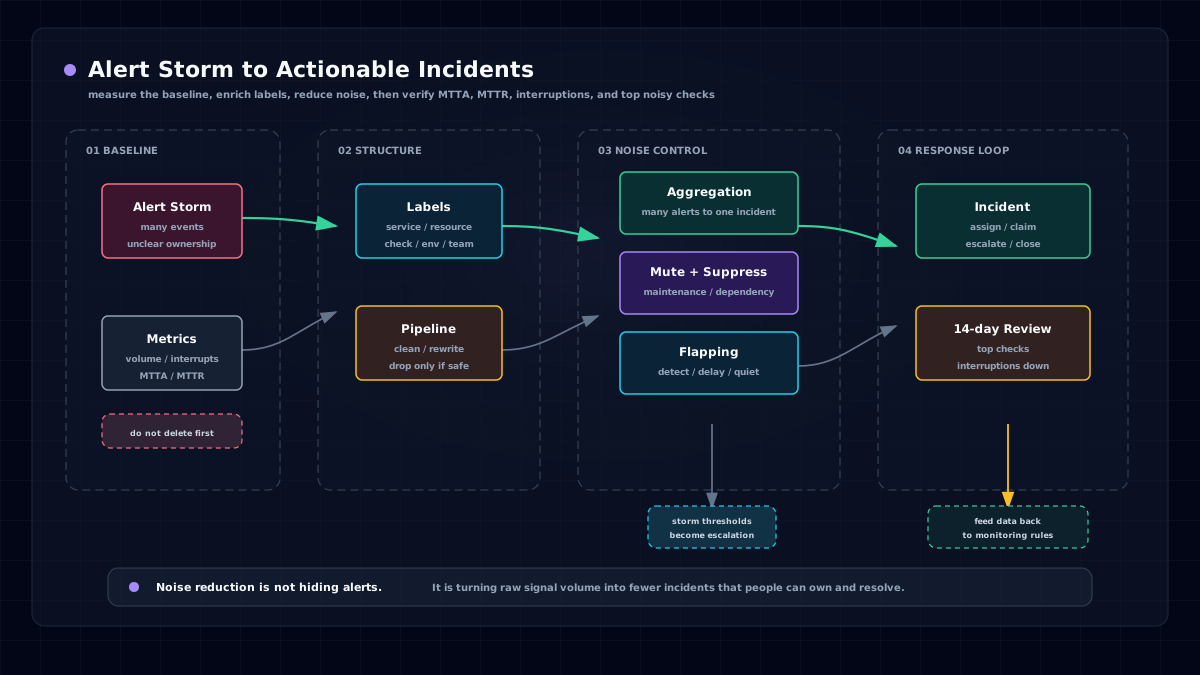
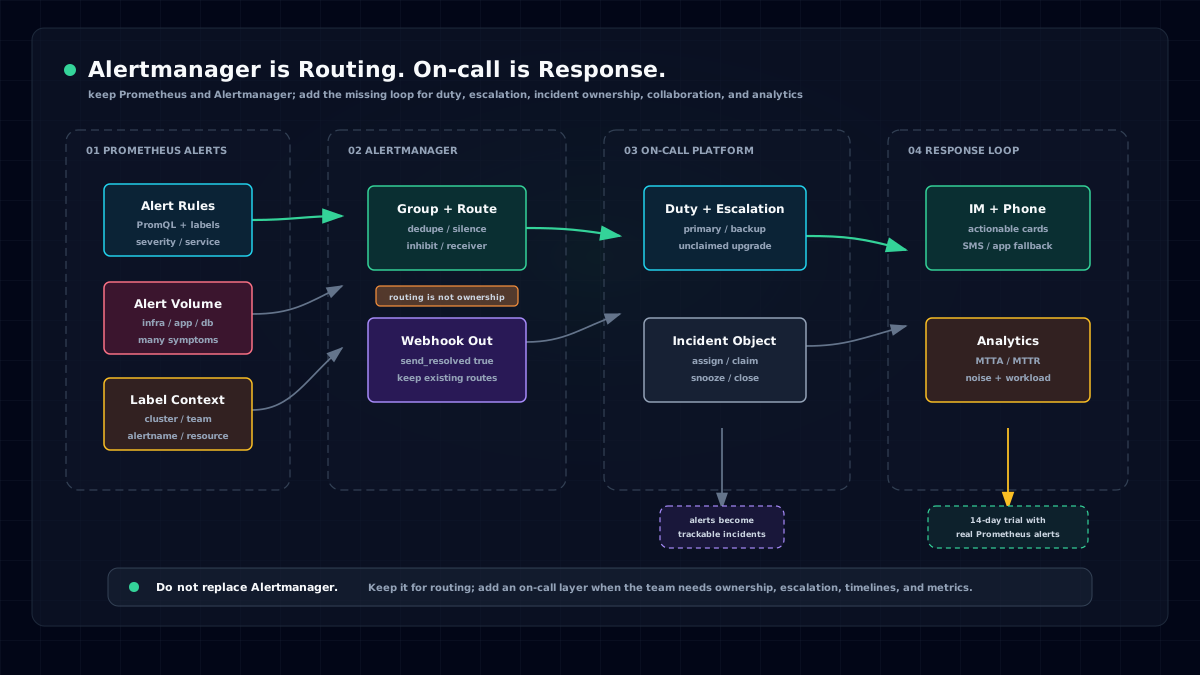
In an On-call process, the Flashcat platform can help in several ways. Unified collection and visualization let engineers see system state and performance metrics more clearly, making it easier to locate problems. Alerting features notify On-call engineers about anomalies and failures in real time. Flashduty, provided by Flashcat, reduces alert noise, lets engineers focus on problem solving, and provides incident collaboration so teams can work together more effectively.