

What Is On-call?
On-call is a term from engineering culture in Europe and the United States. In Chinese, the closest meaning is "being on duty" or "standing by."
An On-call mechanism usually means that a company designates one person or a group of people to stay available during a specific period so they can respond quickly to production incidents or major events. When a production incident occurs, the company notifies this group immediately through email, SMS, phone calls, or similar channels. Whether or not it is during working hours, the responder must stop what they are doing and handle the incident.
In server operations, On-call is especially important. As cloud computing and digital transformation become more common, production systems and IT systems are more tightly coupled, and requirements for stability and availability continue to rise. In this context, On-call culture has become standard for technology companies and directly affects service stability and customer satisfaction.
Why On-call Matters
On-call is essentially a methodology for responding to failures. It originated in Western technology companies in the early 2000s and gradually became popular. In China, On-call culture first emerged in large internet and technology companies, which adopted On-call mechanisms to maintain high service availability and stability.
As cloud computing and digital transformation accelerate, more companies recognize the importance of On-call. Production systems and IT systems must remain highly available 24/7, which requires the ability to detect and recover from failures quickly. On-call exists to meet that need: it helps companies discover and handle incidents as quickly as possible and keep services continuous and stable.
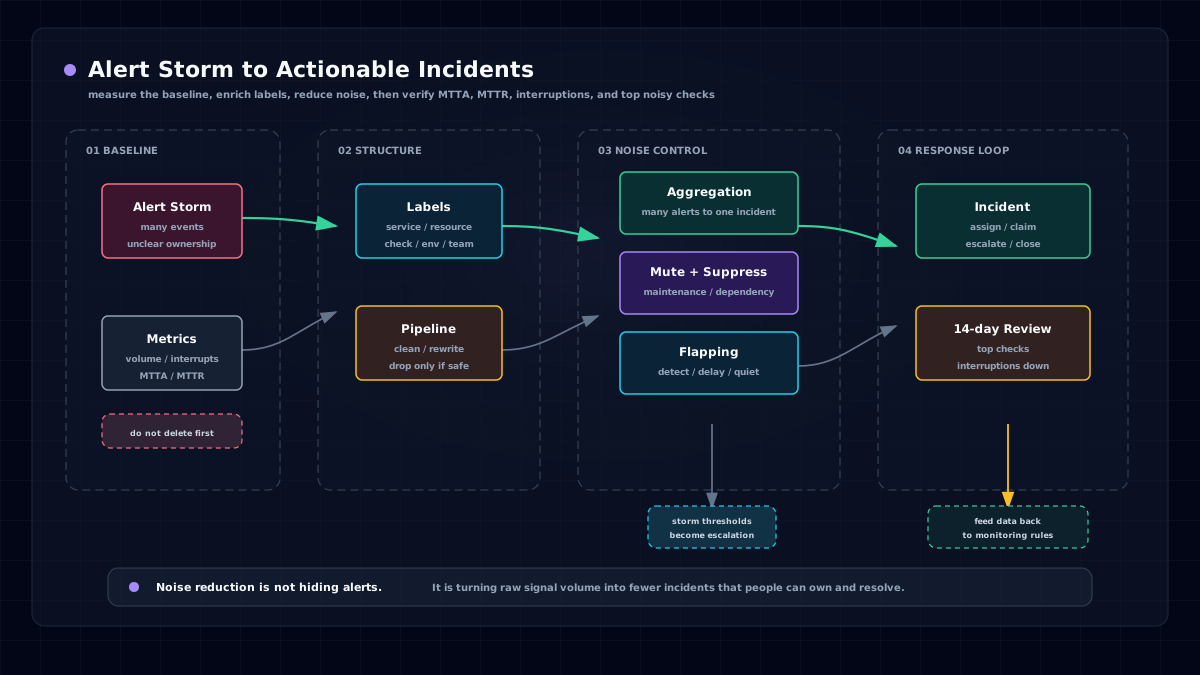
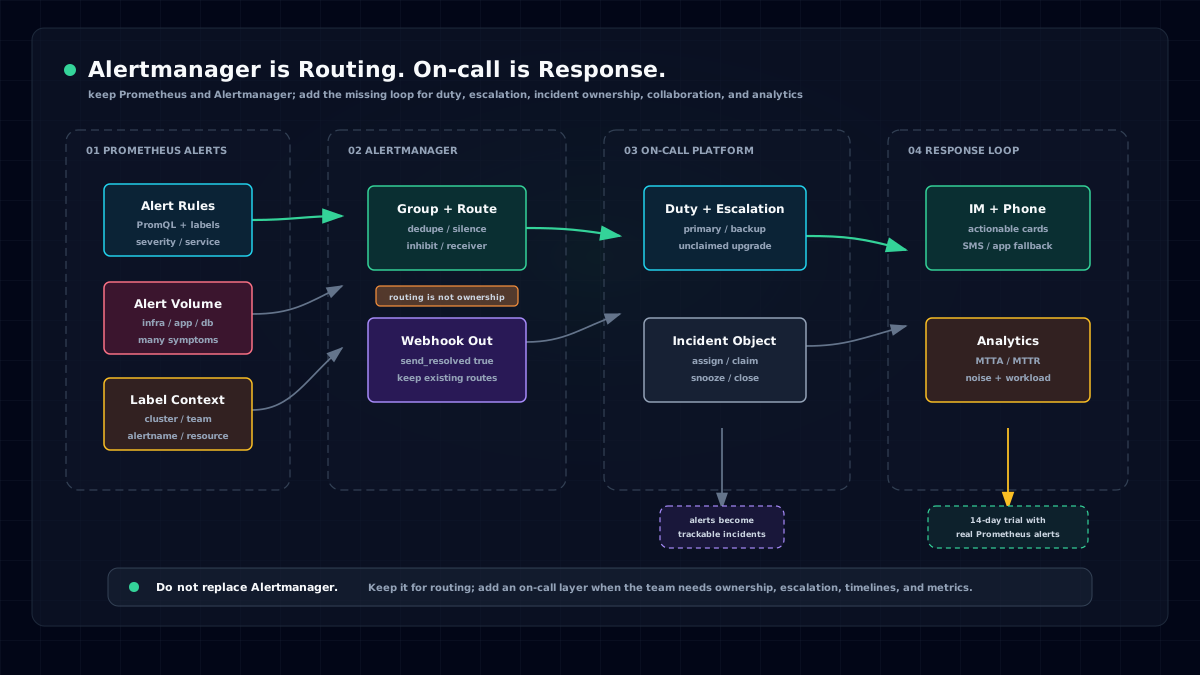
Typically, companies first deploy automated monitoring and alerting systems to detect and warn about failures. These systems monitor server status in real time and trigger alerts when anomalies occur. The alerting system sends incident information to an On-call management platform, which then notifies the right responder based on configured schedules through phone, SMS, WeChat, DingTalk, Feishu, and other channels. The responder handles the issue immediately and restores service as quickly as possible.

Common On-call Scenarios
- Server operations: in large internet companies and data centers, operations teams need to monitor server status around the clock. On-call ensures that when a server fails, a professional team can respond quickly, shorten recovery time, and reduce business loss.
- Major event support: during e-commerce promotions, important meetings, or large events, system load can surge and unexpected problems are more likely. The On-call team stays ready so the system can remain stable under high load. With rehearsed emergency plans, the team can respond quickly at critical moments.
- Cloud services: for cloud service providers, On-call is an important mechanism for protecting customer business continuity. AWS, Google Cloud, Alibaba Cloud, and other providers all maintain On-call systems to protect stability and availability. Real-time monitoring and fast response help provide more reliable services.
How to Do On-call Well
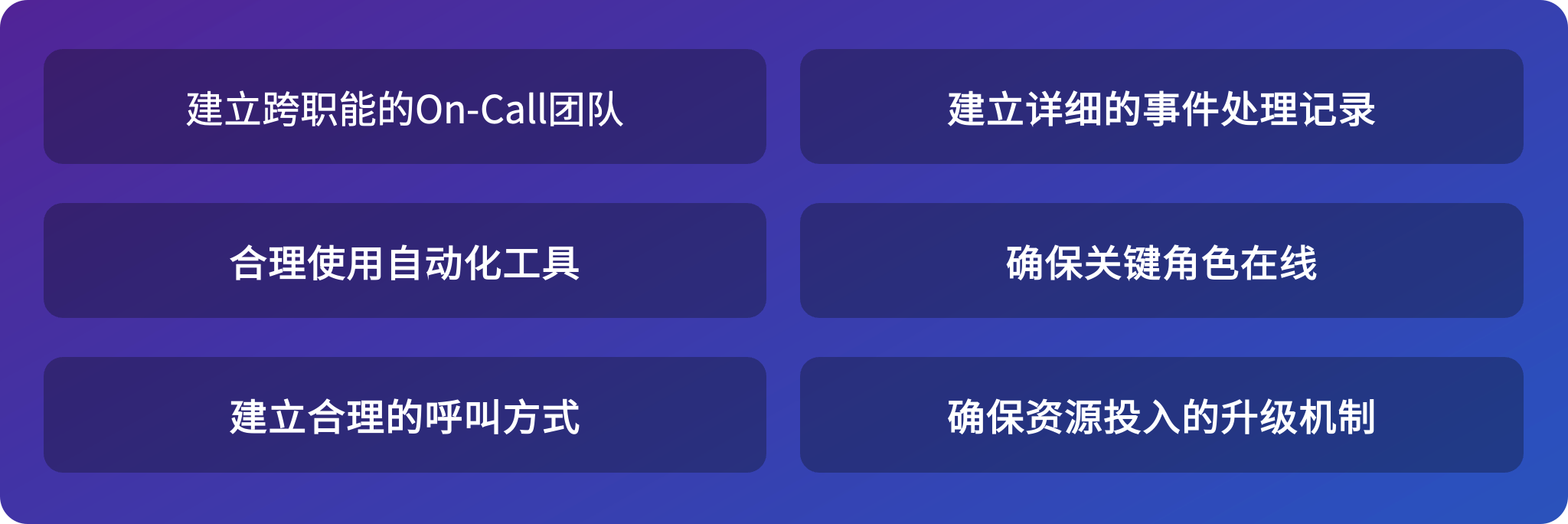
Doing On-call well is not simple. A company needs to prepare across several areas.
1. Build a cross-functional On-call team
On-call should not be only an operations responsibility. It should involve operations engineers, developers, QA engineers, product managers, and senior managers when necessary. Incidents should be routed to the right team based on issue type. This improves handling efficiency and strengthens cross-team collaboration.
2. Keep detailed incident records
Record each On-call event in detail, including time, impact scope, handling process, and resolution. Use those records for later review and improvement, and to prevent similar issues from recurring. By analyzing historical incidents, companies can continuously improve their On-call process and incident-handling ability.
3. Use automation wisely
Use intelligent alert management platforms and automation tools to improve operations efficiency. Automation reduces manual intervention, lowers operations cost, and improves response speed. For example, scripts can automate troubleshooting and remediation, while intelligent alert platforms can classify and prioritize alerts so responders can find the right problem faster.
4. Keep key roles available
For key business applications, make sure at least one critical role, such as the application owner or backup owner, participates in the On-call rotation. Build an emergency response mechanism so the right people can collaborate quickly during incidents, reducing business loss.
5. Establish reliable calling methods
Use a dedicated On-call phone and map it clearly to all On-call systems. The goal is to find the right person at any time. A unified calling method and contact list ensures that relevant people are notified quickly and improves incident-handling efficiency.
6. Define an escalation mechanism for resources
Authorize operations and SRE teams to pull in necessary resources when they cannot resolve an issue alone. When needed, escalate to senior managers to coordinate resources. This ensures enough support for complex or large-scale incidents and improves recovery speed and quality.
On-call culture is a key mechanism for service stability and availability, and for improving team collaboration and emergency response.
By building cross-functional On-call teams, recording incident handling, using automation tools, keeping key roles online, standardizing calling methods, defining escalation mechanisms, and collaborating with cloud vendors, companies can improve On-call efficiency and protect business continuity. In the era of cloud computing and digital transformation, On-call is now an essential part of enterprise operations.
As a cloud-native intelligent operations company, Flashcat provides comprehensive support for On-call scenarios through On-call management, reliable alert delivery, rich monitoring analytics, and professional technical support.