Now

Featured

Why DeepSeek moved its status page from Atlassian to Flashduty

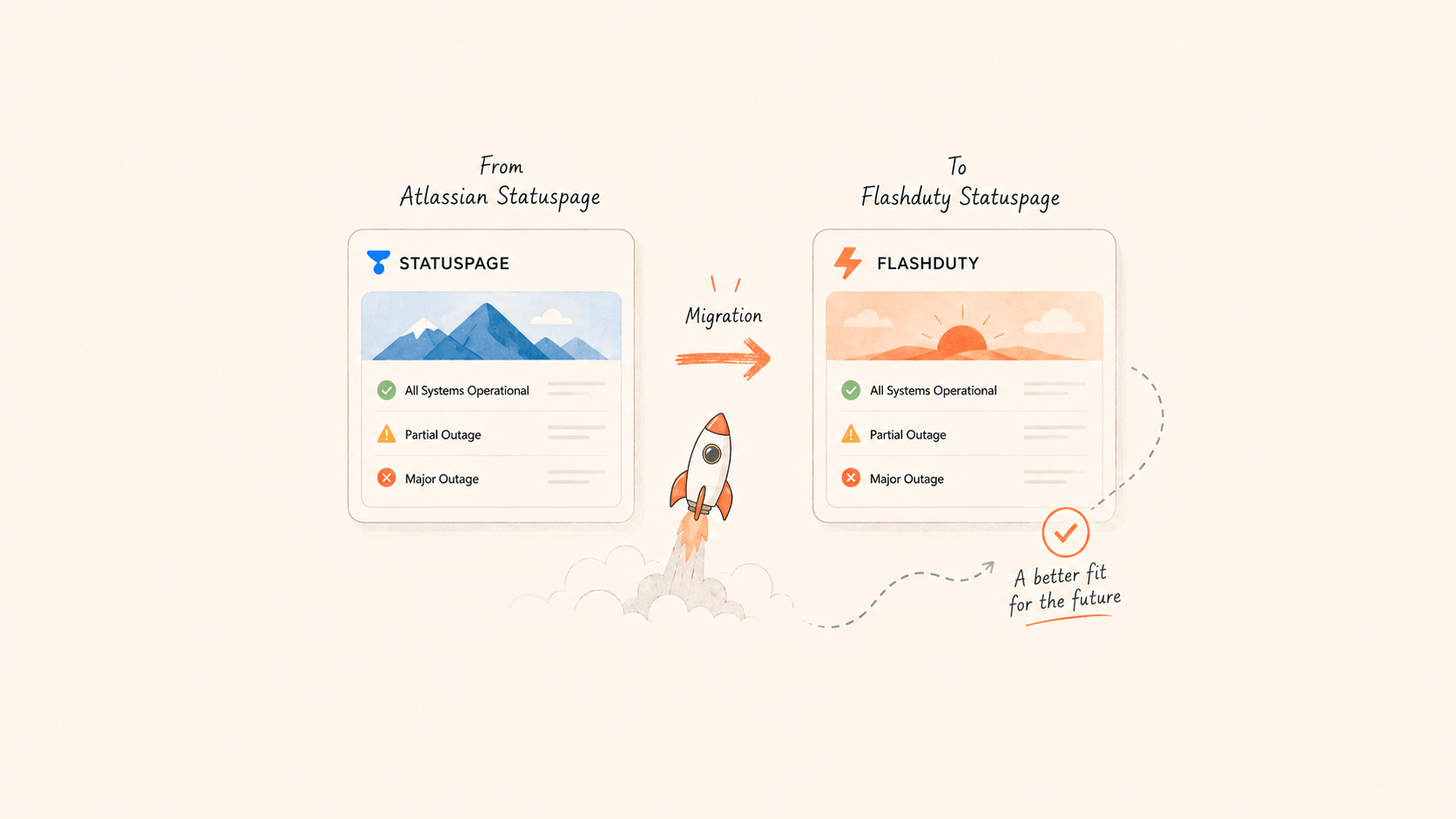
DeepSeek moved its public status page from Atlassian Statuspage to Flashduty Statuspage. The decision came down to Chinese support, cost, page experience, the credibility of self-hosting, and subscriber migration. The migration took two CLI commands.

Flashduty Support

Read more
Why DeepSeek moved its status page from Atlassian to Flashduty
  • Custom Incident Forms: Capture What You Need at Create, Acknowledge, and Resolve

    You want the responder to leave a note when they acknowledge an incident, or confirm the blast radius before closing it. Until now there was nowhere in Flashduty to collect that, so teams fell back on chat threads or a separate ticketing system.

    Custom incident forms now let you configure a separate form for each of three actions: create incident, acknowledge incident, and resolve incident. A form can include custom fields, a free-text note, and image uploads, and each element can be set to required or optional, and shown only when a condition is met, for example requiring the impact scope field only when severity is high.

    Written atomically with the state change

    Submitting an acknowledge or resolve form and updating the incident state happen as a single atomic write. You will not see a form get submitted while the state change fails to apply, or the state change go through while the submitted content is lost.

    One interface across five IM platforms

    Tapping acknowledge or resolve in DingTalk, Feishu, Slack, Microsoft Teams, or WeCom opens the same Console H5 form drawer. There is no separate form implementation per platform, so the experience is identical regardless of which IM the responder is using.

    Configuration and list pages rebuilt

    The field configuration and form management pages were redesigned. Drag to reorder fields, and click any row to edit its display condition, required rule, and help text.

    Mobile fix included

    In the mobile app, acknowledging or resolving an incident with no form configured no longer redirects to an empty form page first. It completes the action directly.

    Getting started

    Go to the incident configuration section of the Flashduty console and open Custom Forms.

    See the product documentation for details.
  • Login Governance Update: Tightening Password Sign-in, API Key Scope, and Account Cleanup

    Before a company adopts a SaaS tool, its security lead's review checklist almost always asks the same questions: can password login be turned off, can an API key's permissions be scoped down to the minimum, is there protection against repeated failed logins, and what happens to an account after an employee leaves.

    These questions used to get addressed piecemeal across separate releases. This update brings several related changes together. As a Flashduty account grows, sign-in methods, integration keys, and membership changes all become things a security review will ask about. The four changes below cover login, key authorization, self-hosted environments, and member management. Coverage differs between SaaS and self-hosted deployments, noted in each section.

    Enforce SSO, turn off password login

    After configuring SAML2.0, OIDC, or CAS under Platform Management → Single Sign-On, you can turn on "Members can only sign in via SSO." Once enabled, every member of the account must authenticate through the identity provider, and password or verification-code login is rejected. This toggle is on by default the first time you configure SSO, and can be turned off if needed. Self-hosted deployments also support LDAP under the same toggle.

    App Keys move from all-access to scoped permissions

    Previously, an App Key could only be created with access to every API. Now, when creating or editing a key, you can choose custom permissions and select the specific API permission points that key actually needs; calls outside that scope are rejected. Even a key with full permissions stays bounded by its creator's current role permissions. Existing keys can also have their scope edited after the fact, which pairs well with rotating keys regularly to keep each key's exposure limited to what the business actually needs.

    Self-hosted: brute-force protection on login, configurable session length

    In self-hosted deployments, exceeding the failed-login limit now triggers a CAPTCHA, reducing the risk of password brute-forcing. Session expiration is also now configurable, so a team can set login session length according to its own security policy instead of a fixed default. Both of these are currently available only in self-hosted deployments, not on SaaS.

    Stricter identity mapping, more thorough member deletion

    For SSO, the user ID mapping field is now optional, and the provider_key identity dimension has been removed, reducing login issues caused by identity provider field changes. When multiple new members sign in via SSO for the first time at once (JIT account creation), account creation is now serialized to avoid duplicate accounts under concurrency. Deleting a member from the Team & Members page now comes with more complete cleanup logic, reducing leftover associated data after deletion.

    Getting started

    The SSO enforcement toggle is under Platform Management → Single Sign-On, see the SSO documentation for setup steps. Scoped App Keys are created under Account Settings → APP Key, see the Open API documentation for authentication and permission details. Member deletion is under Platform Management → Member Management, see the team and member documentation for details.
    For brute-force protection and session length configuration in self-hosted deployments, contact our support team for deployment guidance.

  • RUM Fills In Crash Analysis for Mini Programs, HarmonyOS, and Android NDK

    A crash stack is usually a list of memory addresses or obfuscated short names. It doesn't tell you which function or which line of code failed until a symbol file maps it back to the real source. This update fills in symbolication for WeChat Mini Programs, HarmonyOS, and Android NDK native code, joining the Web and iOS support already in place, so RUM now covers most of what runs in production.

    Here's how it works: a SourceMap, ProGuard mapping file, or debug symbol file generated at build time records how minified or obfuscated positions map back to the original source. Once uploaded, RUM matches incoming crash events by service name and version, then resolves the addresses or short names in the stack into real function names, file names, and line numbers.

    WeChat Mini Program RUM

    Production error stacks used to show only the transformed file path and line/column numbers. You can now run miniprogram-ci get-dev-source-map to generate a sourcemap and upload it through the Flashduty CLI for automatic resolution. Issue grouping and a dedicated Mini Program dashboard are also in place.

    HarmonyOS RUM

    A HarmonyOS crash stack can mix ArkTS/JS frames with native .so frames. Once the @flashcatcloud/hvigor-plugin is installed, the build automatically uploads the ArkTS sourcemap and the unstripped native symbol files, so both frame types resolve in the console. The dashboard and symbol management page now support HarmonyOS, and a Trace integration guide has been added.

    Android NDK Native Crash Symbolication

    We fixed a grouping bug that was splitting a single NDK crash site into several unrelated issues. Upload the unstripped .so file with its GNU build-id, and the C/C++ crash address resolves to a function name and line number. Native startup metrics now separate cold start from warm start instead of reporting them together.

    Alert Decoupling and Private Deployment

    RUM alerts used to require the On-call module to reach anyone. They can now be delivered as a Webhook POST straight to your own endpoint, so a self-hosted, RUM-only deployment without On-call can still receive alerts. The SDK also supports a custom data ingest endpoint and CDN for private deployments.

    Getting started

    Go to Flashduty console → RUM → App Management → Source Management to upload symbol files for your platform. Alert delivery is configured under "App Management → Alert Settings."

    See Source Mapping and Error Tracking and Issue Alerts for details.

  • Status Page Upgrade: Dual-Region Custom Domains and One-Click Atlassian Statuspage Migration

    Switching away from Atlassian Statuspage is rarely about standing up a new page. The hard part is carrying over history and subscriber relationships intact, otherwise every subscriber's email link and RSS feed breaks.

    Flashduty Status Page shipped late last year. This update covers two things: a real migration path from Atlassian Statuspage, and a custom domain setup rebuilt to hold production traffic.

    One-click Atlassian Statuspage migration

    Migration runs in two CLI steps. flashduty statuspage migrate structure imports components, groups, history events, and notification templates without notifying subscribers, so you can check the result before going further. Once it looks right, flashduty statuspage migrate email-subscribers imports the mailing list. History event feeds keep Atlassian's history.rss and history.atom URL format, so subscribers never have to update their feed URLs. Both commands are paginated and idempotent, so re-running them does not duplicate data.

    Custom domains 2.0

    Custom domains used to resolve through a single CNAME target. They now resolve through separate mainland China and international routes. Certificates are issued and renewed automatically by Caddy, with an idempotency fix that prevents duplicate certificate requests under concurrent traffic. Existing customers on the old single-CNAME setup keep working without any DNS changes.

    RSS/Atom feeds and one-click unsubscribe

    Public status pages now support RSS/Atom subscriptions, no email confirmation required. The history route also accepts an Atlassian-compatible alias, so subscribers migrating over keep their old feed URLs. On the email side, notification emails now carry the RFC 8058 List-Unsubscribe header, so Gmail, Apple Mail, Outlook, and Yahoo show a native unsubscribe button at the top of the message that takes effect immediately.

    Fix

    Components hidden on an internal status page no longer leak into the public change history.

    Getting started

    Go to Flashduty console → Status Pages → Settings to configure a custom domain. Migration steps and CLI commands are in Get started with Flashduty Status Page; feature comparison is in Status Page Comparison.

  • Post-Mortem is Here: Turn Every Incident into a Starting Point for Team Growth

    Restoring service doesn't mean the incident is truly over. The real closure begins with a post-mortem.

    In practice, many teams quickly return to business as usual once an incident is resolved: root cause analysis is scattered across chat messages, follow-up actions remain verbal agreements, and similar issues quietly resurface down the road. The previous Resolution feature only supported basic field-level recording, falling short of a complete, structured post-incident analysis workflow.

    To address this, Flashduty officially introduces Post-Mortem, fully replacing the former Resolution. From incident review and root cause analysis to corrective action tracking, Post-Mortem helps teams build a more complete retrospective process, turning every incident into reusable organizational knowledge, rather than a forgotten cost.

    If you previously relied on custom data fields in Resolution, you can continue to achieve the same through Custom Fields.

    AI-Assisted Generation: Quickly Produce a Post-Mortem Draft

    Post-Mortem supports AI-generated report drafts. The system synthesizes incident details, response timelines, and discussion threads from Lark or Slack war rooms to automatically outline the sequence of events and extract key insights. This significantly reduces the effort needed to get started, allowing teams to focus on analysis and improvement.

    Real-Time Collaborative Editing: Reach Consensus More Efficiently

    An incident is never one person's responsibility, and neither should the post-mortem be. Multiple team members can co-edit the same report simultaneously, with changes synced in real time and auto-saved. No more passing documents back and forth or manually merging versions -- the entire team can align on facts, fill in details, and build consensus on a single page.

    Template System: Never Miss What Matters

    What happened? Why did it happen? How do we prevent it from happening again?

    Post-Mortem provides built-in templates covering six core sections: Summary, Root Cause, Impact, Timeline, Corrective Actions, and Lessons Learned. You can also create custom templates to codify your team's best practices into a standard workflow, ensuring every post-mortem is thorough, consistent, and high-quality.

    Incidents are inevitable, but the same issue happening twice doesn't have to be. With Flashduty Post-Mortem, teams can document root causes more clearly, track improvements more consistently, and accumulate lessons more systematically. This is more than a report. It's where organizational resilience begins to grow.

    Get Started

    Head to Flashduty Console -> On-call -> Post Incident to start using it.

    For more details, refer to the Flashduty documentation.

    This feature is available on the Flashduty Professional plan.

  • Flashduty Status Pages: Sevice Down, Trust Online

    Service interruptions are inevitable. Trust should not go offline with them.

    In time-critical incident response, a lack of transparency often causes more damage than the incident itself. Repeated status inquiries from stakeholders consume team attention, while unclear service visibility quietly undermines customer confidence.

    The Flashduty Status Pages is designed to address this problem directly. By providing a single, transparent view of service availability, it removes unnecessary communication overhead for technical teams. Real-time updates replace guesswork, so even when a service is temporarily unavailable, professionalism and reliability remain visible.

    Reduce Repetitive Tickets at the Source

    Instead of reacting to questions, let information move first.

    The Flashduty Status Pages allows users to check service status at any time and subscribe to updates for the services they care about. When an incident occurs, the latest progress is automatically delivered to subscribers—no manual refresh or confirmation required. When information arrives before questions, repetitive inquiries naturally decline, allowing support teams to focus on resolving the issue itself.

    Make Maintenance Transparent and Controlled

    The Flashduty Status Pages is not limited to unexpected incidents. Planned maintenance is also clearly communicated.

    By publishing maintenance windows in advance, users can understand when changes will occur and which services may be affected. Upgrades become predictable, changes are explained, and maintenance is no longer mistaken for an outage. Clear maintenance communication ensures that every service adjustment reflects reliability and professionalism.

    Prove Stability with Data

    Stability is not a statement: it is a record. The Flashduty Status Pages automatically retains historical availability data, turning abstract SLA commitments into clear, verifiable uptime records. These objective data points provide direct evidence of service reliability and form a solid basis for demonstrating operational performance and earning long-term trust.

    With the Flashduty Status Pages, service status is no longer a black box running in the background. Whether it is an incident or scheduled maintenance, every update is visible and every historical event is traceable. Technical teams can return their focus to solving problems, while users stay informed with timely and accurate updates. This clarity, built in moments of uncertainty, is the strongest foundation for lasting customer trust.

    Try It Out

    Visit Flashduty Console → On-call → Status Pages to explore the feature.

    Visit Flashduty Docs for more information.

    You can also subscribe to the official Flashduty Status Pages to receive timely updates on Flashduty service status.

  • Routing Rules Update

    This release introduces significant enhancements to Alert Routing, focusing on better automation, improved readability, and a smoother configuration experience for complex routing scenarios.

    image.png

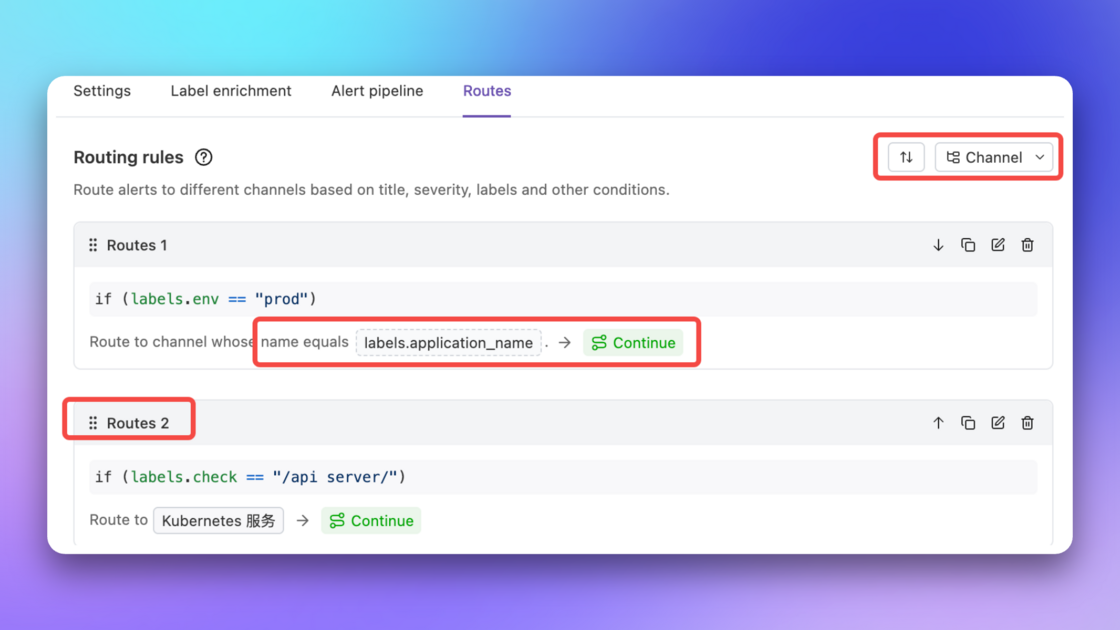
    1. Name Mapping–based Auto Routing

    Added support for Name Mapping, allowing alerts to be automatically routed to a channel whose name matches a label value.

    This eliminates the need to manually maintain explicit routing targets for each service or application, making it ideal for multi-service and multi-team environments.

    Example:

    • labels.application_name = "order-service"
    • The alert is automatically routed to the order-service channel

    2. Channel Filtering and Sorting

    When working with many routing rules, you can now filter and sort rules by channel, making it easier to locate, understand, and manage routing configurations.


    3. Routing Rules UI Improvements

    • Drag-and-drop support for reordering routing rules
    • Clearer presentation of rule conditions and actions
    • Cleaner layout for faster configuration and troubleshooting
  • Introducing War Room, Enhanced Change Management & Streamlined Incident Collaboration

    War Room

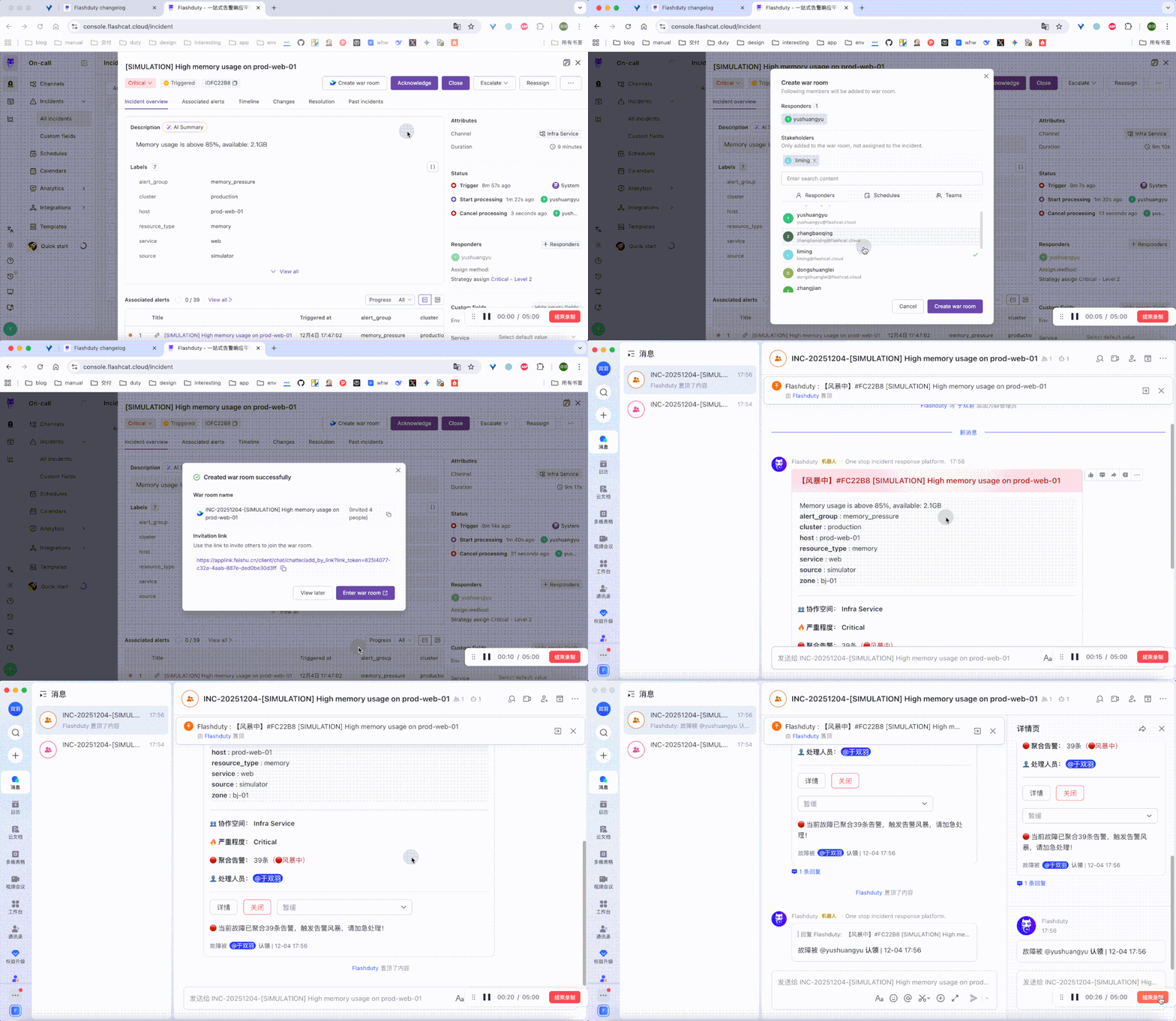
    When critical incidents strike, every second counts. Now you can spin up a War Room with a single click to rally your team and accelerate incident response.

    Key Capabilities:

    • Instant Group Chat: Create a Lark, DingTalk, WeCom, or Slack channel in one click, automatically inviting responders and stakeholders
    • Live Updates: Incident cards are posted and pinned in the channel, updating in real-time as the situation evolves
    War Room Demo

    Webhook Call History

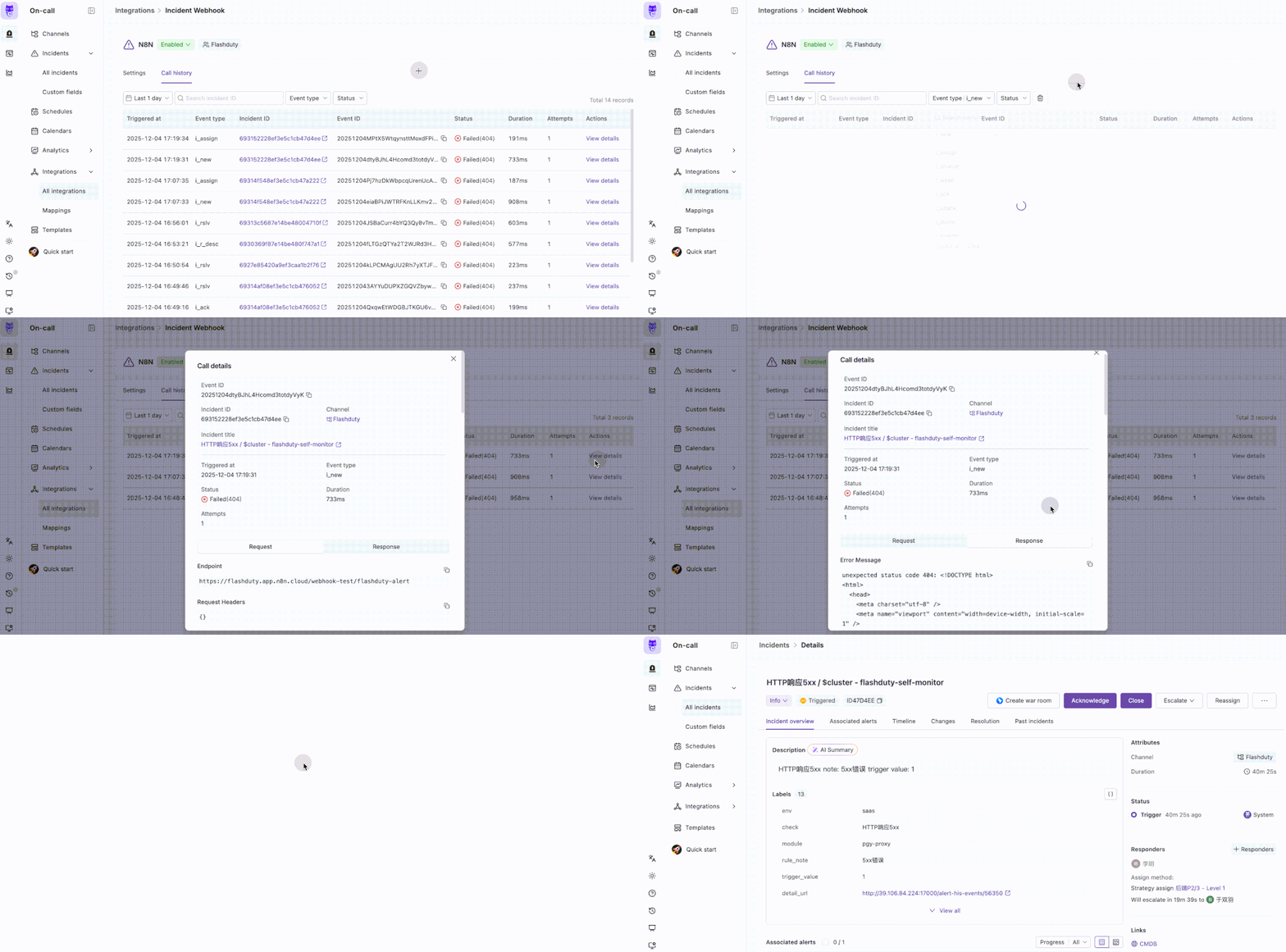
    No more guesswork when troubleshooting webhook issues. We now provide full visibility into webhook call history to help you pinpoint problems quickly.

    What's Logged:

    • Response status and error codes
    • Retry attempts
    • Complete request and response payloads
    Webhook Call History Demo

    Change Events

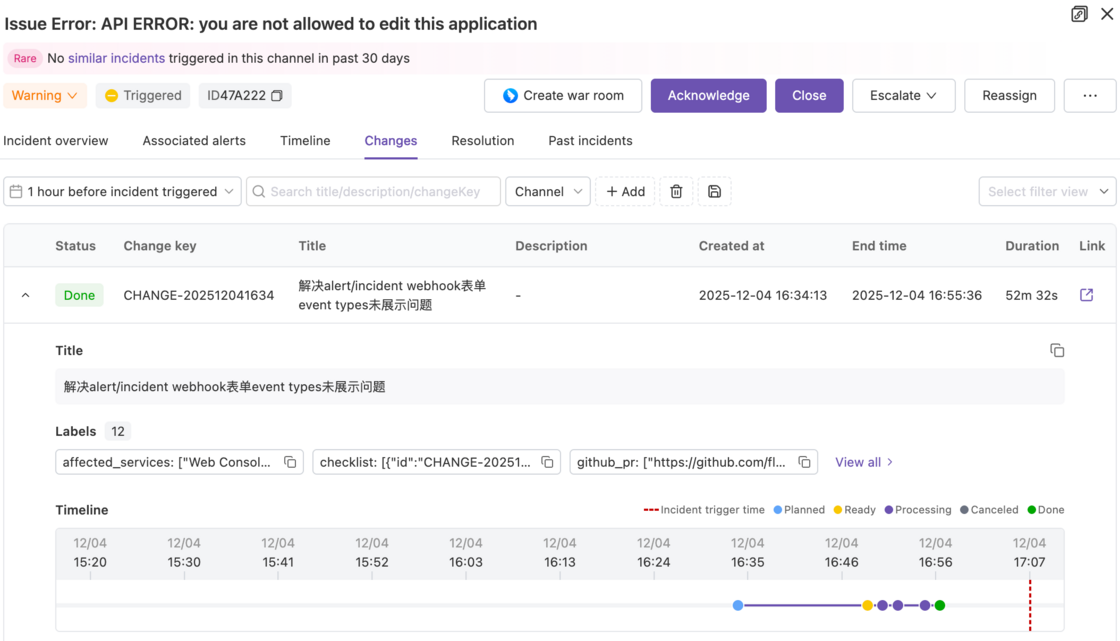
    Most incidents are caused by changes. We've significantly upgraded our change event management to help you correlate incidents with changes more effectively.

    What's New:

    • Dynamic Routing: Route change events to relevant collaboration spaces based on your business context
    • Label Enrichment: Enrich incoming events with additional metadata through post-processing
    • Redesigned UI: The change history page now supports custom views and label-based filtering for incident correlation
    Change Events Page

    Improvement

    1. Incident List: Bulk assign incidents to improve handling efficiency
    2. Novel Incidents: Option to disable novel incident detection
    3. Alert Storm: Configure multiple storm thresholds for tiered alerting
    4. Dispatch Policy: Specify severity levels for group chat channel configurations
    5. Incident Details: Custom label sorting and JSON view for incident labels
    6. Integration Hub: Added Zoho ServiceDesk Plus and Cloudflare integrations
  • AI Summary and ServiceNow

    AI Summary

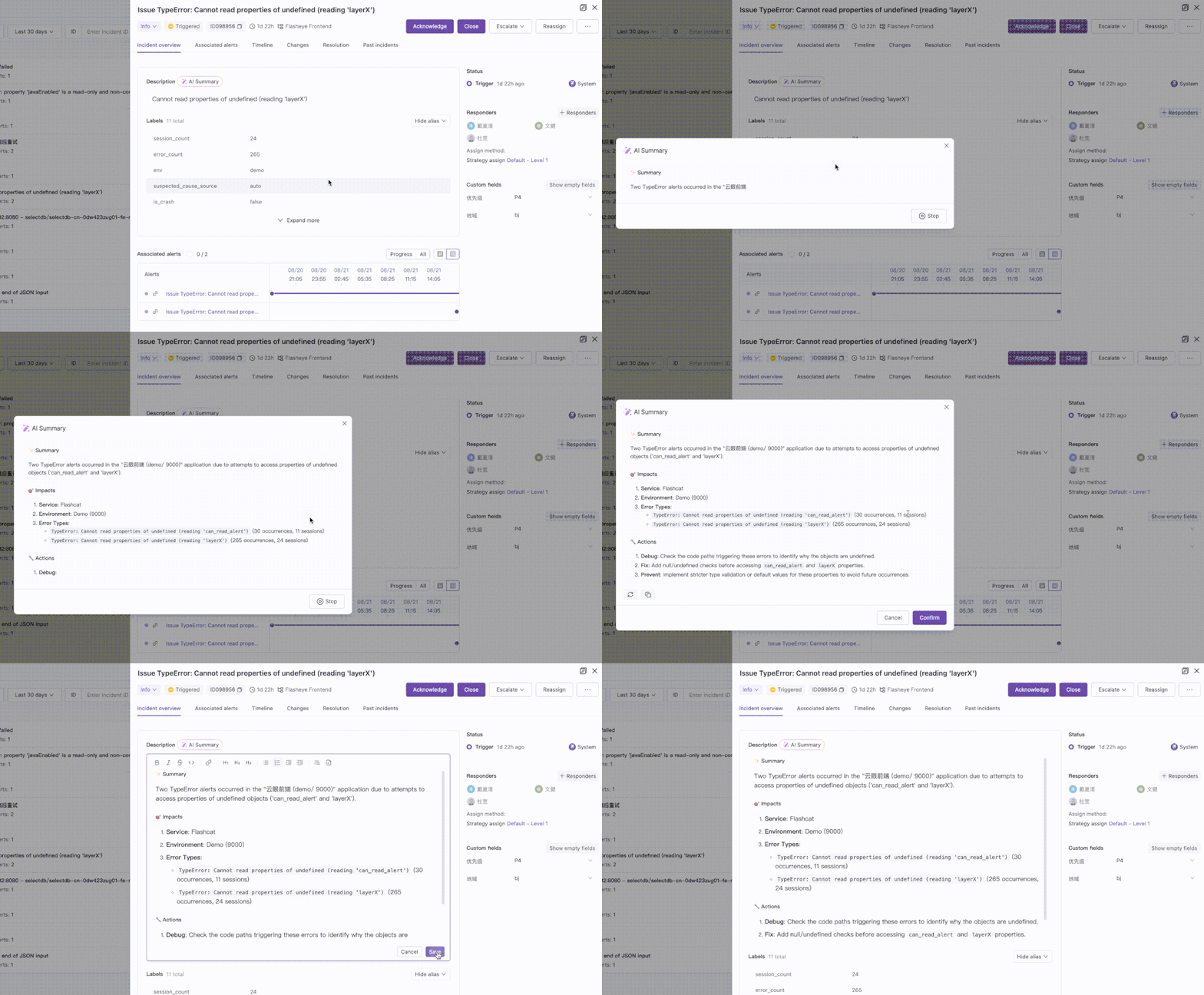
    Added AI Summary feature to quickly distill incident details, ideal for scenarios with numerous aggregated alerts. The summary focuses on:

    1. Incident Overview (key details)
    2. Impact Scope (resources, services, etc.)
    3. Actionable Steps (troubleshooting, mitigation, prevention)
    AI Summary

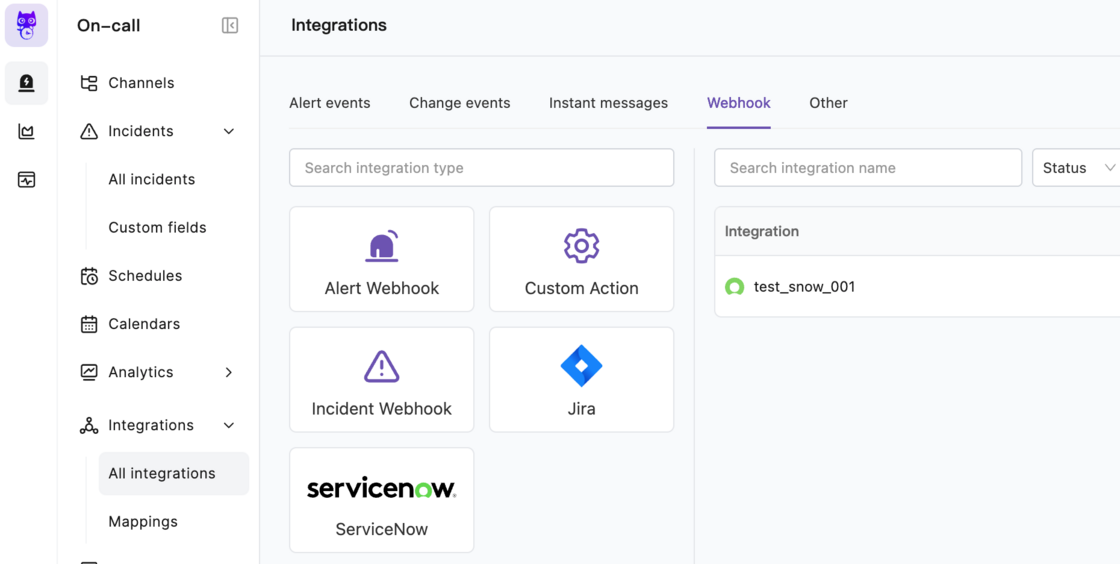
    ServiceNow Integration

    Introduced ServiceNow integration with bidirectional incident data synchronization:

    1. Supports manual and automatic sync triggers
    2. Enables two-way synchronization between Flashduty and ServiceNow for shared insights
    ServiceNow Integration

    Improvement

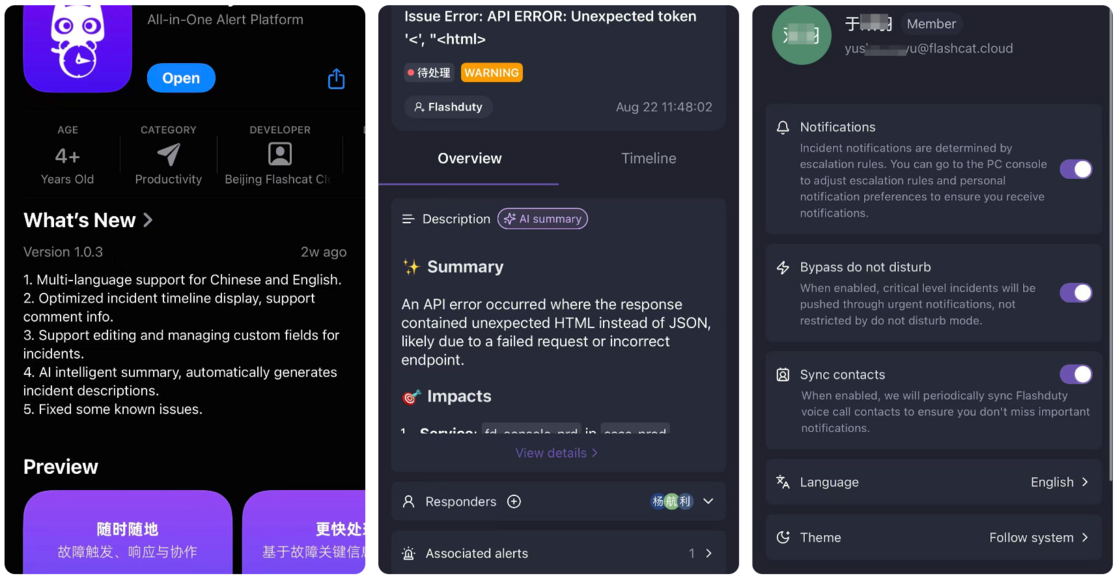
    Mobile App

    The new Flashduty mobile app is now available on app stores with a revamped UI and enhanced functionality:

    1. Added support for English language
    2. Integrated AI Summary feature
    3. Enhanced incident details with custom fields, improved tag display, and optimized text editing
    Mobile App

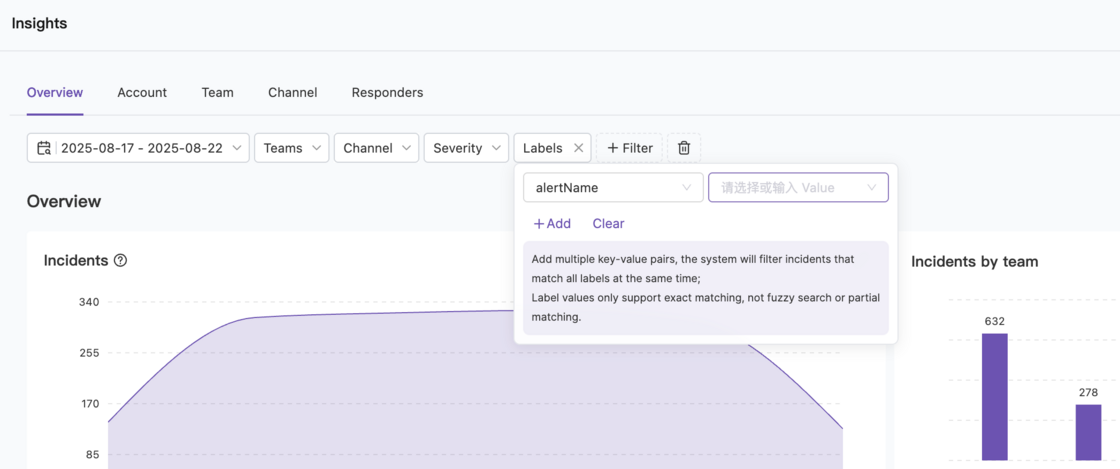
    Analytics Dashboard

    The analytics dashboard now supports filtering incidents by tags and custom fields, enabling more precise data analysis.

    Analytics Dashboard

    Microsoft Teams

    The Teams app now supports sending incident assignment notifications to channels or group chats, with interactive features, dynamic updates, and cross-platform synchronization.

    Microsoft Teams

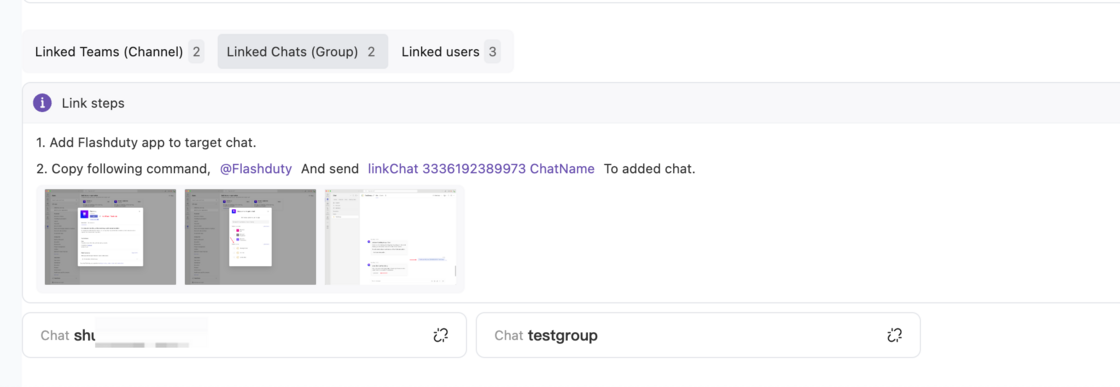
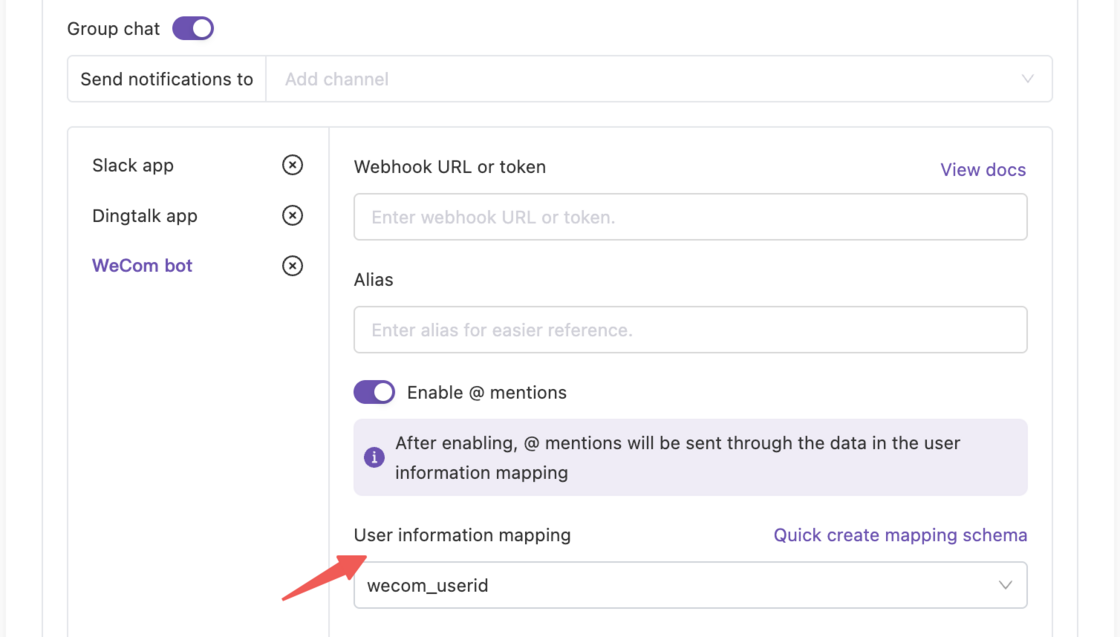
    WeChat/Zoom/Lark Bots

    1. Added support for uploading email-to-account ID mappings for platforms like Lark
    2. Enhanced escalation rules to leverage mappings for targeted @mentions in group chat notifications
    Bot Enhancements
  • Changes in June

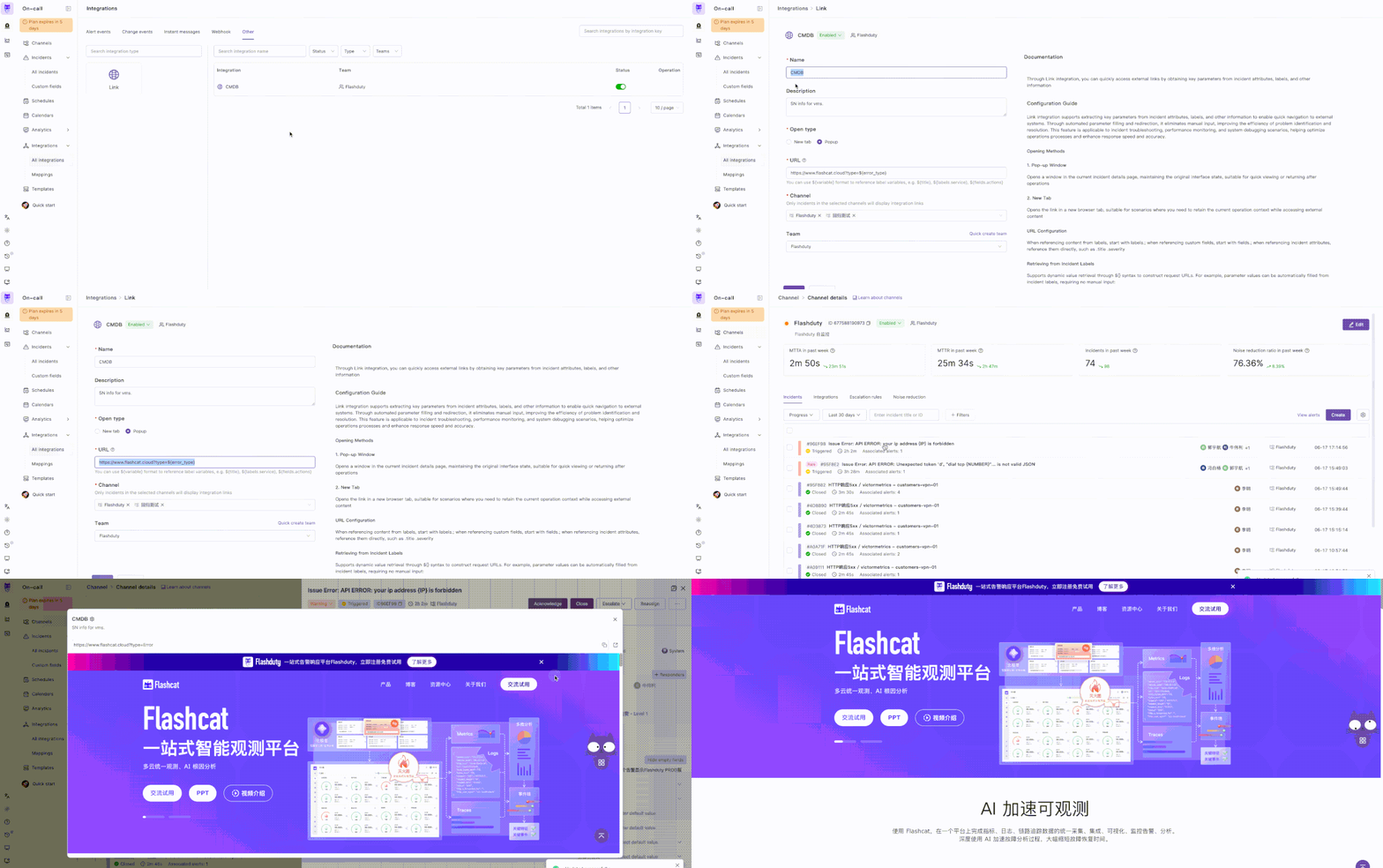
    1. Link Integration
      Enables seamless connection with external systems, allowing direct navigation to CMDB host information pages based on machine hostname, boosting operational efficiency.

      Link Integration Demo
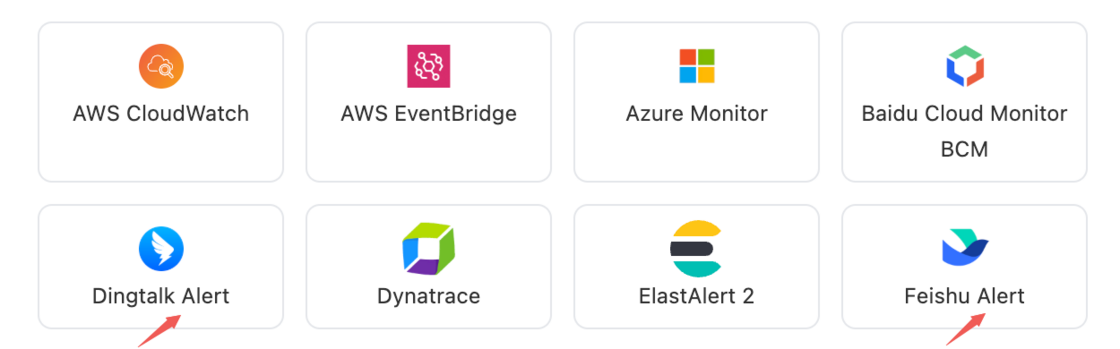
    2. DingTalk and Feishu Alert Integration
      Supports receiving alerts via DingTalk and Feishu Webhooks, streamlining team communication.

      DingTalk and Feishu Alerts

    Improvement

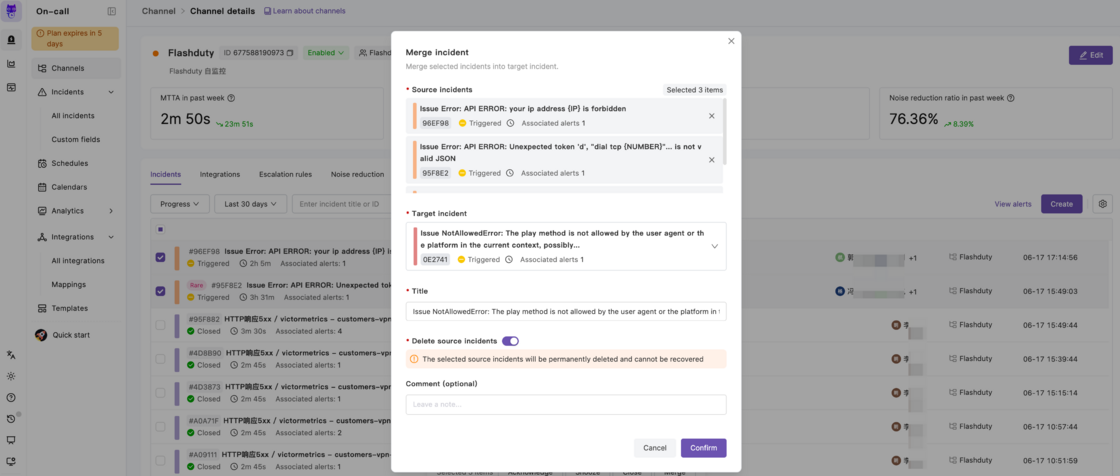
    1. Incident Merge Interaction Optimization
      Supports fuzzy matching and deletion of merged incidents, improving flexibility and accuracy in incident management.

      Incident Merge Optimization
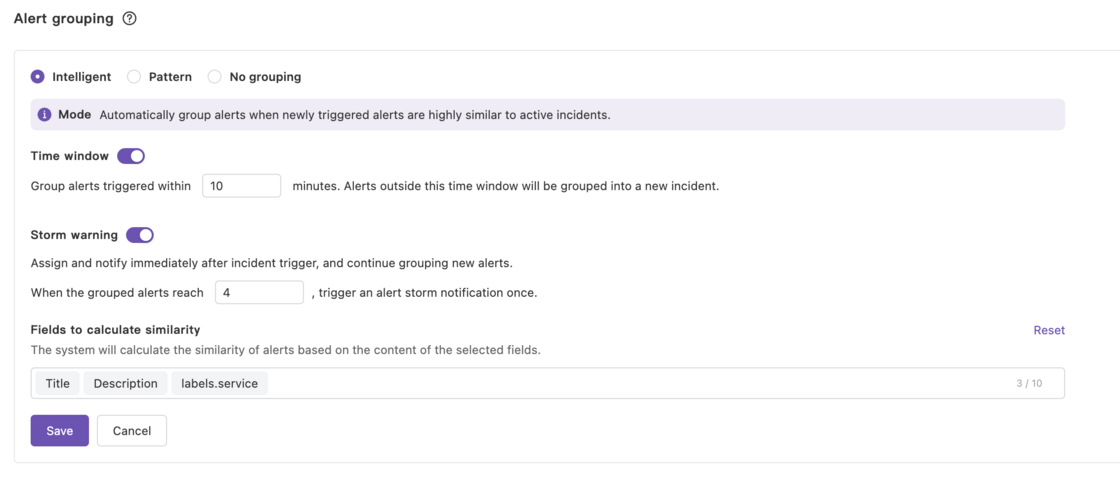
    2. Alert Intelligent Grouping with Custom Fields
      Allows similarity calculations based on specified fields, enhancing the precision and efficiency of alert aggregation.

      Smart Aggregation
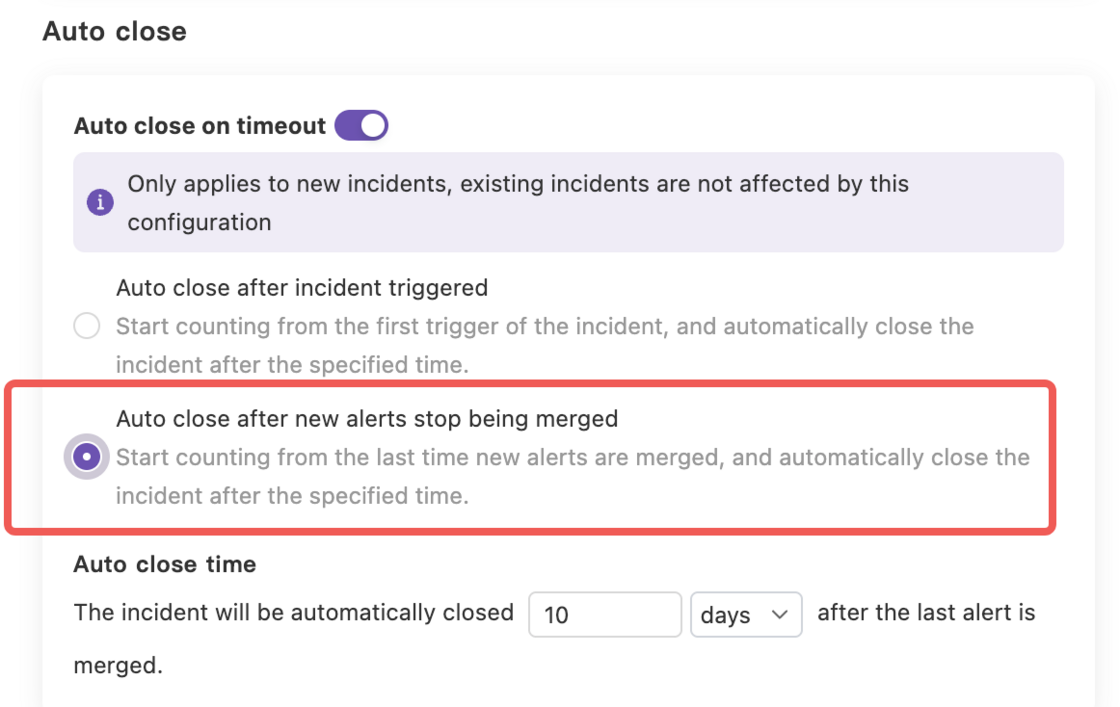
    3. Incident Timeout Closure Enhancement
      Introduces countdown-based closure triggered by the last merged event time, making incident management smarter.

      Timeout Closure
    4. Shared Integration Permission Management
      Allows setting management teams for shared integrations, restricting configuration changes to team members for enhanced security.

      Shared Integration
    5. Incident Suppression Upgraded to Flapping Detection
      Offers options to either continue notifications or silence them when an incident enters flapping status, providing flexibility for various scenarios.

      Flapping Detection
  • Fixed License and Alert Routing Version Management

    License Management

    1. New Fixed License Type: Valid indefinitely and non-preemptible, ideal for long-term platform users.
    2. Flexible License Assignment: Account administrators can assign fixed or temporary Licenses to members or revoke them.
    3. Member Self-Management: Regular members can voluntarily relinquish their License.
    4. Batch API Operations: Support for batch setting of member License types via API.
    image.png

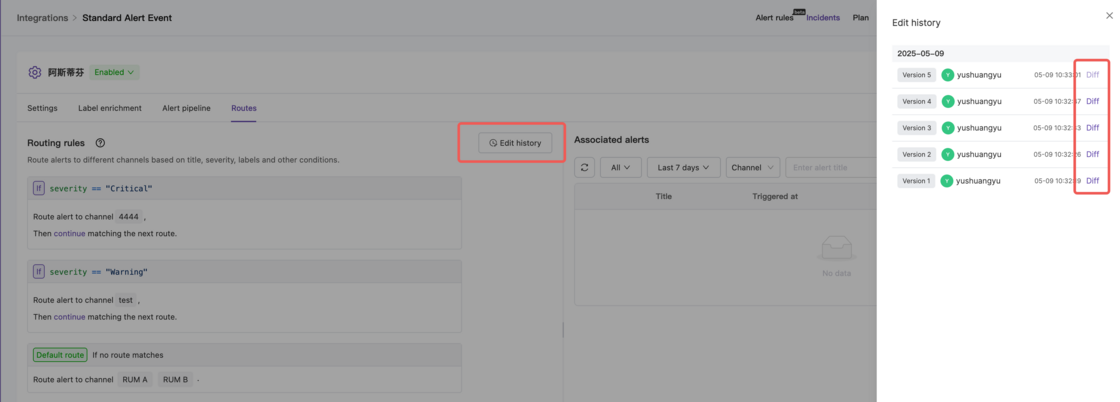
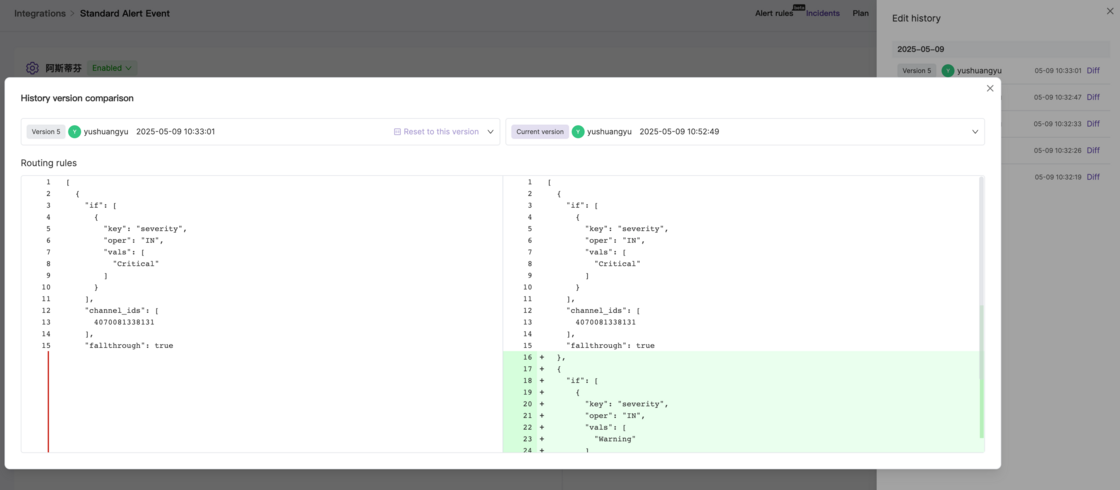
    Routing Version Management

    1. Historical Version Viewing: The alert routing in the integration center now supports viewing historical versions.
    2. Version Comparison: Compare current routing rules with historical versions.
    3. One-Click Rollback: Roll back to any historical version of routing rules.
    image.png
    image.png
  • New Jira Integration and Template Management!

    Jira Integration

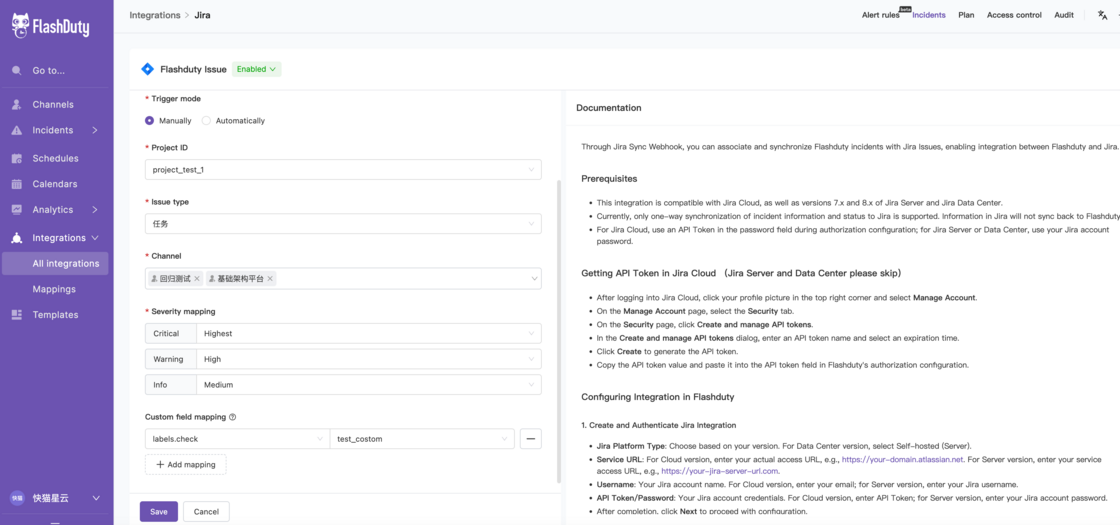
    • Manual or Automatic Sync of Incident Data to Jira Issues: Choose to sync incident details to Jira Issues manually or automatically, ensuring your team can track and resolve issues promptly.
    • Support for Jira Cloud and Server Versions: Seamlessly integrates with both Jira Cloud and Server, accommodating your preferred deployment.
    • Sync Limited Scope of Incidents: Allows selective syncing of incidents within a defined scope, offering greater control over what gets synchronized.
    • Incident Field Mapping Management: Customize the mapping between incident fields and Jira Issue fields for accurate and tailored data transfer.
    image.png

    Coming Soon: We’re working on enabling Jira Issue syncing back to Flashduty incidents. Stay tuned!


    Improvement

    Template Management

    • Revamped Interaction Design: The template management interface has been redesigned for a more visually appealing and user-friendly experience.
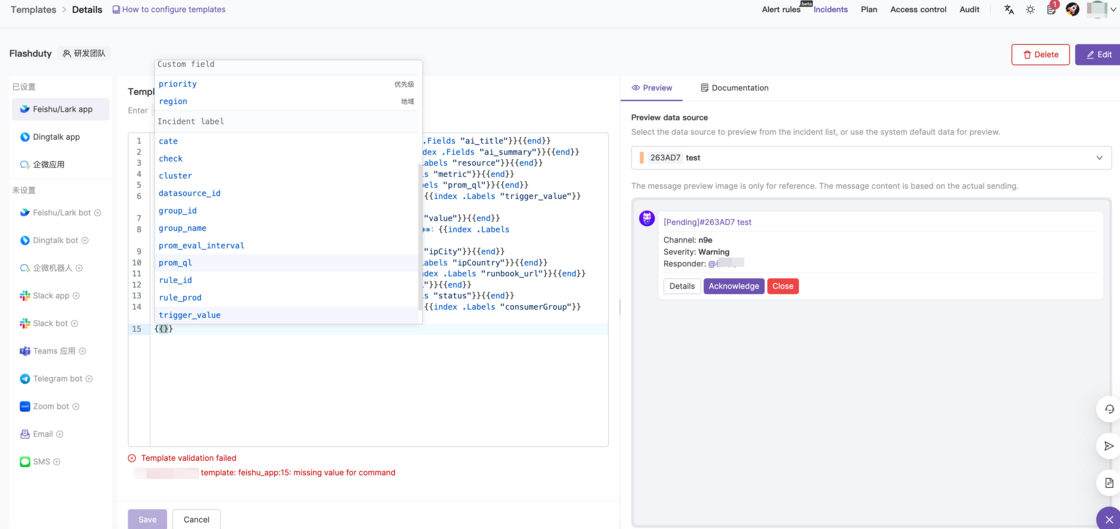
    • Preview and Debug with Historical Incidents: Select past incidents to preview and debug templates, ensuring configurations are spot-on.
    • Smart Input Suggestions: Type {{ to trigger automatic input prompts, simplifying configuration and boosting efficiency.
    image.png

    Other Enhancements

    • IM Integration: Added support for private deployments of Feishu and DingTalk, meeting the needs of more enterprises.
    • Incident Webhook: Now supports subscribing to incident comment events for real-time updates.
    • Incident Suppression: Introduced incident suppression functionality, with options to enable or disable (disabled by default), helping you manage notifications more effectively.